Elevate your beverage business with unbeatable glycol chiller deals


 Sign In
Jul 23 2024
7876
Key Takeaways
- U.S. draft beer systems are diverse and complex due to the country’s unique beer culture, regulations, and sheer number of craft breweries.
- Draft beer is fresher, more profitable, and eco-friendlier than packaged beer, but only if the system is matched to the venue’s needs.
- System choice (direct-draw vs. long-draw) depends on venue size, tap distance, and beer menu. Hybrid systems are increasingly common.
- Core components include U.S.-specific keg couplers, color-coded beer/gas lines, specialized faucets, shanks, and legally required drip trays.
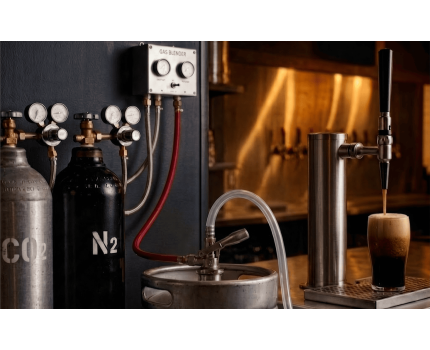
- The choice of gas—CO₂, nitrogen, or mixed “beer gas”—is critical for serving different beer styles correctly.
- Cooling method matters: Glycol-cooled systems excel in large venues and warm climates, while air-cooled is best for short runs and small bars.
- Regulations, climate, and beer diversity all affect draft system design and operation in the U.S.
- Emerging trends: Self-serve taps, smart monitoring, eco-upgrades, and portable/mobile draft solutions are reshaping the market in 2025.
Customization is key: There’s no one-size-fits-all draft system—consultation and expert installation ensure beer quality and business success. Picture a busy bar on a Friday night in Austin, Texas. As glasses clink and laughter fills the air, bartenders pull perfect pints from a gleaming draft system. But behind every smooth pour lies a complex network of tubes, regulators, gas tanks, and chilled lines. In the U.S., draft beer systems are more than just machinery—they're essential tools for maximizing profit, maintaining beer quality, and meeting customer expectations.
Unlike other countries, the U.S. has a diverse beer culture fueled by over 9,000 craft breweries. This diversity means draft systems must handle everything from nitrogen-poured stouts to heavily carbonated IPAs. Understanding the nuances of these systems is no longer optional—it's business-critical.
Let’s set the stage with one essential question: why draft? Draft beer is usually fresher, more cost-effective per ounce, and environmentally friendlier than bottles or cans. It reduces packaging waste, lowers shipping weight, and allows bar owners to curate a unique tap list. However, the system behind that experience must be correctly installed, maintained, and tailored to the venue’s needs.
What Makes the U.S. Market Unique?
- Scale of Consumption: With one of the highest per-capita beer consumptions in the world, U.S. venues range from 5-tap dive bars to 100-tap mega pubs.
- Legal Complexity: Local, state, and federal regulations (especially around gas storage and alcohol service) play a significant role.
- Diverse Beer Styles: From West Coast hop-bombs to lactose-heavy dessert stouts—each style has different draft requirements.
Today’s draft systems are smarter, safer, and more specialized than ever before. From sensor-driven pour monitoring to self-serve tech, the U.S. market continues to evolve.
Direct-Draw vs. Long-Draw Systems: Pros and Cons
Imagine running a small craft bar in Portland with 10 taps behind the counter. A direct-draw system—where kegs sit just beneath the tap, as in most kegerators — might be perfect. But if you operate a high - volume restaurant in Chicago with the keg room 50 feet away? A long-draw glycol-cooled system becomes essential.
Direct-Draw Systems
These are the simplest and most common for smaller setups. Everything—keg, faucet, tubing, and refrigeration—sits in one contained unit.
Pros:
- Easy installation and maintenance
- Lower upfront costs (ideal for new bars or pop-up locations)
- Minimal line length means less beer waste and foaming issues
Cons:
- Limited to locations where space allows for close proximity to the taps
- Less scalable
Long-Draw Systems
These setups use a combination of glycol power packs and insulated trunk lines to move beer from a remote keg room to the bar.
Pros:
- Great for large venues or multi-floor setups
- Centralized keg storage
- Scalable and customizable
Cons:
- Higher installation and maintenance costs
- Requires glycol chillers and skilled technicians
What Should You Choose?
Consider the following:
- Distance from keg storage to tap
- Volume of beer served daily
- Available space and refrigeration access
- Budget for both setup and long-term upkeep
U.S. bars often hybridize systems—using direct-draw for fast-moving styles and long-draw for specialty or slow-pour beers.
What’s the takeaway? Choose the system that aligns not just with your venue size, but with your beer menu, throughput, and customer experience goals.
Key Components of a U.S. Draft Beer System
Behind every seamless pour lies a network of hardware. U.S. draft systems rely on specific sizes and formats that match American regulations and beer profiles. Whether you're setting up for your first bar or upgrading a brewery taproom, it's essential to understand the anatomy of a system.
Keg Couplers (U.S. Styles)
In the U.S., the most common keg coupler is the D-System Sankey. This fits nearly all domestic beers. Others include:
- S-System: Used for some European imports
- G-System: Less common but used for brands like Anchor Steam or some specialty brews
- U-System: Used by Guinness and other UK stouts
Always check the keg’s origin and required coupler before investing.
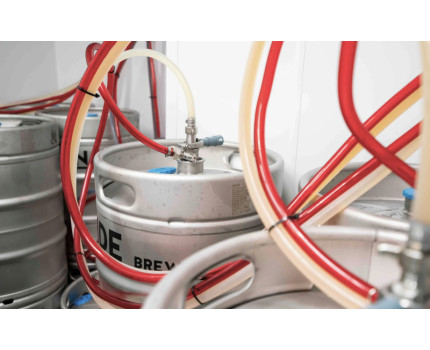
Beer and Gas Lines
- Beer Lines: Usually 3/16" or 1/4" vinyl tubing, as found in our draft beer dispense system components.
- Gas Lines: Typically 5/16" or 3/8", colored red or blue for CO₂ and nitrogen respectively
- U.S. systems prioritize color-coded, NSF-certified food-safe tubing
Faucets and Shanks
U.S. draft beer towers, faucets, and shanks are typically made of chrome-plated brass or stainless steel.
- Standard faucet: Good for most beers
- Stout faucet: For nitrogen pours, includes a restrictor disc
- Forward-sealing faucet: Reduces bacterial contamination, common in high-end setups
Shanks are often 4–6" long to pass through a tower or wall, usually with 7/8"–14 thread spec.
Regulators
U.S. CO₂ tanks use CGA-320 valves, and regulators must match.
- Dual-gauge regulators are common: one shows tank pressure, the other line output (measured in PSI)
- Common output settings range from 10–14 PSI for ales and lagers, 30–35 PSI for nitrogen blends
Drip Trays and Towers
These final touches combine form and function:
- Towers come in single, double, and T-format for 4+ faucets
- Drip trays help with sanitation and are legally required in some states
Understanding each component’s purpose helps not just with setup, but with troubleshooting and expansion. It also ensures compliance with U.S. safety standards and efficiency regulations.
Choosing the Right Gas: CO₂, Nitrogen, and Beer Gas
Selecting the appropriate gas is crucial for maintaining beer quality, especially in a market like the U.S. where beer styles vary wildly in carbonation and mouthfeel. While many assume CO₂ works universally, that’s not always the case—especially for nitro stouts or certain lagers.
CO₂ (Carbon Dioxide)
This is the most commonly used gas. It's ideal for most ales and lagers.
Advantages:
- Maintains carbonation without affecting taste
- Widely available and affordable
- Compatible with most keg systems in the U.S.
Considerations:
- Over-carbonation can cause excessive foaming
- Sensitive to temperature fluctuations
Most U.S. beers pour best between 10–14 PSI at 36–38°F.
Nitrogen (N₂)
Used primarily for nitro beers (e.g., Guinness), nitrogen adds a smooth, creamy texture and tight bubbles.
Typical Setup:
- Requires a stout faucet with restrictor disc
- Higher PSI (30–35)
- Doesn't dissolve into liquid as easily—hence the signature cascade effect
Drawbacks:
- Requires specialized tanks and regulators
- Incompatible with most high-carbonation beers
Beer Gas (Nitrogen/CO₂ Blends)
Known as "beer gas," common blends include 75% N₂ / 25% CO₂ or 70/30. These are used to balance smoothness with carbonation.
Used For:
- Stouts and porters
- Some Belgian styles
- Extended keg line systems where pure CO₂ may over-carbonate
Benefits:
- Extends keg life
- Enhances texture without altering flavor drastically
Choosing the Right Gas Strategy
Factors to weigh:
- Beer styles served (lagers vs. stouts)
- Line length (long-draw systems benefit from mixed gases)
- Serving pressure and consistency
Pro Tip: Many U.S. bars use a dual system—CO₂ for most taps, a nitrogen or beer gas line for specialty pours. This ensures quality and flexibility without overcomplicating the setup.
The wrong gas can ruin a pour. The right one? It elevates it to perfection.
Glycol vs. Air-Cooled Systems in the U.S. Climate
Beer quality depends on temperature stability—from keg to faucet. In the diverse climates of the U.S., the cooling method in a draft system can make or break the drinking experience. Two main options exist: glycol-cooled and air-cooled systems.
Glycol-Cooled Systems
These use a glycol chiller that pumps a glycol-water mixture through insulated lines, surrounding the beer lines.
Ideal For:
- Long-draw systems (over 25 feet)
- Hot or variable climates (e.g., Southern U.S., high-traffic venues)
Pros:
- Excellent temperature control
- Supports multiple towers or bars
- Maintains beer quality during transit
Cons:
- Higher initial cost and more complex installation
- Requires space for the glycol power pack
- Regular maintenance needed (glycol changes, leak checks)
Air-Cooled Systems
These rely on cold air pushed through an insulated conduit containing the beer lines.
Ideal For:
- Shorter runs (less than 25 feet)
- Smaller venues or direct-draw extensions
Pros:
- Lower cost
- Simple to install and repair
- Can use existing refrigeration systems
Cons:
- Limited cooling distance
- Greater susceptibility to temp fluctuations
U.S. Climate Considerations
- Southwest & Southeast: Glycol systems often essential due to high ambient temps
- Northern regions: Air-cooled might suffice in small venues
- Mountain or variable climates: Dual-zone or hybrid systems may be needed
Efficiency and Energy Use
Modern glycol chillers are becoming more energy-efficient with digital thermostats and eco-friendly refrigerants.
Pro Tip: Use trunk housing with polyethylene barrier tubing and thick insulation to reduce energy costs and preserve beer quality.
In the U.S., the choice isn’t just about cost—it’s about beer integrity and consistency in every climate zone.
Emerging Trends in Draft Beer Systems (2025 U.S. Market)
The world of draft beer is evolving rapidly. In 2025, U.S. venues are adopting tech-forward and customer-focused innovations that didn’t exist just a decade ago. These trends aren’t gimmicks—they’re redefining what it means to serve beer.
Self-Serve and Tapwall Technology
Digital self-pour systems, often featuring RFID cards or mobile app integration, let patrons serve themselves by the ounce.
Benefits:
- Speeds up service and reduces labor costs
- Encourages exploration across a wide variety of beers
- Provides detailed analytics on customer preferences
Common Platforms: PourMyBeer, iPourIt, and Pourtek are leading U.S. providers.
Smart Draft Monitoring
Systems like DraftLine and BarTrack allow real-time monitoring of:
- Keg levels
- CO₂/nitrogen pressure
- Line temperature and cleaning cycles
Outcome: Better quality control, reduced waste, and consistent pours—ideal for chain locations and high-volume venues.
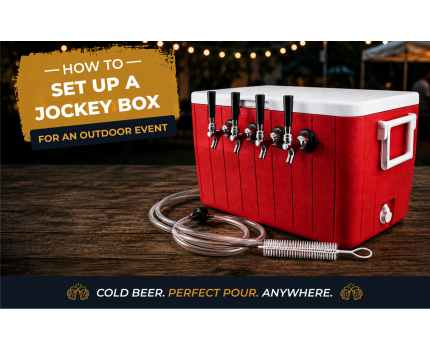
Mobile & Event Draft Systems
Portable systems, like our portable cooling & dispensing units, designed for:
- Food trucks
- Outdoor festivals
- Breweries expanding into taproom takeovers
Battery-powered glycol chillers and compact keg lockers are now viable thanks to lower power demands and compact refrigeration tech.
Health-Conscious & Low-ABV Options
There’s growing demand for:
- Non-alcoholic craft beers on draft
- CBD- or adaptogen-infused beverages
- Gluten-free and low-calorie draft options
System Impact: Requires careful consideration of line flavor retention and carbonation levels.
Eco-Friendly System Upgrades
- CO₂ reclamation units
- Insulated trunk lines with heat-reducing tech
- Use of glycol mixes with lower environmental impact
These trends aren’t just about flash—they improve margins, sustainability, and the customer experience. The best bars and breweries in 2025 will not just keep up with these changes—they’ll lead them.
A well-designed draft beer system isn’t just a tool—it’s a strategic investment. Whether you're launching a neighborhood bar, expanding a brewery taproom, or retrofitting an upscale restaurant, the decisions you make about cooling systems, gas types, or tap configurations directly impact your beer quality, customer satisfaction, and profitability.
The U.S. market in 2025 demands smarter, cleaner, and more flexible beer dispense solutions. From cutting-edge tech like smart pour tracking to the resurgence of non-alcoholic and low-ABV draft options, staying current is crucial. What’s more, climate, beer style diversity, and local code requirements make every setup unique. Ultimately, there’s no one-size-fits-all solution—but there is a best-fit system for your space, your beer, and your goals.
Ready to Upgrade or Design Your Draft Beer System?
Let Beer-Co’s experts help you build a system that keeps your beer flowing perfectly. Explore our services or get in touch for a personalized consultation.
Because when it comes to beer, great taste starts at the tap.