Elevate your beverage business with unbeatable glycol chiller deals


 Sign In
Oct 14 2025
5240
Serving beer at the ideal temperature isn’t just about taste — it’s a key part of quality control, customer experience, and system efficiency. For bars, breweries, and restaurants using long-draw draft systems, keeping beer cold from the keg cooler to the tap requires more than a basic refrigeration unit. That’s where glycol power packs come into play.
A glycol chiller isn’t just a convenience — it’s a critical component for maintaining consistent beer temperature across long distances, especially in setups where kegs are stored remotely. But with various sizes, capacities, and configurations on the market, choosing the right glycol power pack can be confusing.
This guide breaks down the essentials. Whether you’re outfitting a new draft system or upgrading an existing one, we’ll walk through how glycol systems work, what factors affect sizing, and how to ensure your beer stays perfectly chilled — from the first pour to the last.
What Is a Glycol Power Pack and How Does It Work in Draft Beer Systems?
A glycol power pack is a specialized refrigeration unit used to maintain beer at a consistent temperature from the keg cooler all the way to the faucet. This equipment is a core component of a long-draw draft beer system, commonly found in bars, restaurants, and breweries where the beer lines extend beyond short distances.
At its core, the glycol power pack contains a refrigeration compressor, a glycol reservoir, and a pump. The system chills a mixture of propylene glycol and water, often referred to as beer glycol, to a target temperature — typically around 28°F to 32°F. This chilled glycol circulates continuously through glycol lines, which run alongside the beer lines inside an insulated bundle known as a trunk line.
These trunk lines are what allow establishments to serve cold beer even when the kegs are stored dozens or even hundreds of feet away from the bar. The glycol circulates in a closed-loop system, meaning it never comes into contact with the beer. Instead, it travels out from the power pack, through the trunk line, and then returns to the chiller in a continuous loop.
By maintaining direct thermal contact with the beer lines, the chilled glycol prevents the beer from warming as it travels. This is particularly important in commercial environments where consistent temperature is essential for preserving taste, minimizing foam, and ensuring the beer is served at its ideal temperature.
In short, glycol power packs keep beer cold during long-distance travel through lines, ensuring customers get the freshest pour every time — no matter how far the keg is from the faucet.
How to Select the Ideal Glycol Chiller for Your Beer Lines
Choosing the correct glycol power pack isn’t just about refrigeration capacity — it’s about matching your system to your bar or restaurant’s specific draft line setup. The right size and type of chiller depend on a few critical variables that affect how efficiently beer stays cold from keg to tap.
One of the most important factors is line length — the total distance between your keg cooler and your faucets. Longer lines require more powerful chillers to maintain cold temperatures throughout the entire run. For instance, a system with a 25-foot trunk line has very different demands compared to a 150-foot run. The further the beer must travel, the more glycol capacity and circulation strength you'll need.
Number of taps is the second consideration. Each beer line contributes additional thermal load and increases the overall volume that needs to be cooled. A system serving four taps will have different needs than one supporting twenty. The more lines you have, the greater the heat exchange surface area that must be kept cold.
Next, consider ambient temperature conditions. If your beer lines run through hot kitchens, ceilings, or other warm spaces, heat gain becomes a significant concern. This requires a more powerful glycol unit or additional insulation for your trunk lines. In high-temperature environments, underpowered chillers may struggle to maintain desired temperatures.
Finally, distinguish between a commercial draft system and a small bar setup. Small bars with kegs located within 10–15 feet of the faucet might be able to use direct-draw systems or smaller undercounter glycol chillers. In contrast, larger venues or those with remote walk-in coolers need high-capacity power packs with stronger pumps, larger reservoirs, and higher BTU outputs.
Calculating Glycol Chiller Load Based on Line Length
To properly size a glycol chiller, follow a step-by-step assessment:
- Measure total trunk line length from cooler to tower (one way). Double it to account for both outbound and return glycol lines.
- Count the number of beer lines in the trunk. Each line increases heat load.
- Estimate BTU capacity required. As a general guideline:
- A 1/5 HP chiller can support systems up to ~50 feet with 4–6 lines.
- A 1/3 HP chiller suits mid-sized systems around 75–100 feet with 6–8 lines.
- Larger systems (100–250 feet, 10+ lines) require 3/8 HP to 3/4 HP chillers or more.
- Adjust for environmental factors. Increase capacity if your system runs through high-heat zones or lacks insulation.
- Consult manufacturer specs for flow rate (GPM), reservoir volume, and pump strength to match your layout.
A properly sized glycol chiller ensures energy efficiency, long-term reliability, and — most importantly — perfectly chilled beer at every tap.
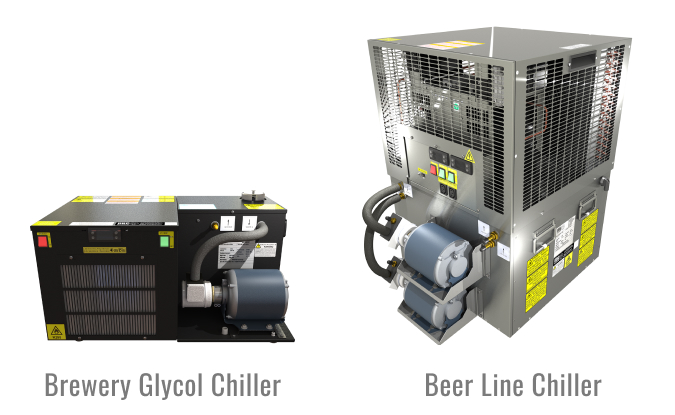
What’s the Difference Between a Brewery Glycol Chiller and a Beer Line Chiller?
Although they both use a glycol-water mixture for cooling, brewery glycol chillers and beer line chillers serve very different purposes and operate at different scales. Understanding the distinction is essential when designing or upgrading a draft or brewing system.
Brewery glycol chillers are engineered for production-level tasks — most notably, maintaining precise temperatures in fermentation tanks, brite tanks, and sometimes crash cooling vessels. These systems operate at higher capacities and are built to manage significant thermal loads over extended periods. Instead of focusing on beverage delivery, they regulate fermentation temperatures to control yeast activity and product consistency. Chillers in this category often feature larger compressors, industrial-grade pumps, and the ability to handle multiple temperature zones simultaneously.
By contrast, beer line chillers — commonly known as draft system glycol power packs — are much smaller in scale. Their sole function is to keep beer cold as it travels from a keg cooler to the draft tower. These chillers don't interface with fermentation tanks or brewing equipment. Instead, they circulate chilled glycol through insulated trunk lines that run alongside beer lines, typically in bars, restaurants, or tasting rooms.
In terms of complexity, brewery-grade systems are more advanced, customizable, and significantly more expensive. Draft line chillers, while essential, are comparatively simple plug-and-play solutions that focus solely on delivery temperature, not production control.
When Do You Need a Brewery-Grade Glycol Cooling System?
Investing in a brewery-grade glycol chiller makes sense when your business involves any part of the beer production process. If you’re operating fermentation tanks, lagering tanks, or other vessels that require precise temperature regulation, a standard draft beer chiller simply won’t be enough. These higher-capacity systems are essential for:
- Temperature-controlled fermentation
- Cold crashing
- Maintaining storage temperature for brite tanks
- Multiple batch management across various tanks
Breweries also benefit from multi-circuit configurations, allowing different tanks to be cooled to different temperatures at the same time. In short, if you're brewing in-house — whether on a small or industrial scale — brewery-grade chillers provide the infrastructure needed for quality control and consistency.
Key Features to Consider When Choosing a Glycol Beer Chiller System
Choosing the right glycol chiller isn’t just about horsepower — it’s about selecting a system that integrates efficiently with your draft setup, delivers stable cooling, and performs reliably over time. Here’s a breakdown of the core features you should evaluate when selecting a glycol beer chiller system.
Pump power and pressure are among the most important specifications. You’ll need a strong enough pump to push glycol through the trunk line to the draft tower and back without losing flow or cooling efficiency. Look for models with high GPM (gallons per minute) ratings and enough pressure to overcome the system’s total head height and line resistance.
Glycol reservoir size determines how much pre-chilled fluid is available at any moment. Larger reservoirs help stabilize system temperature and prevent short-cycling of the compressor, particularly in high-demand systems.
Digital temperature controls offer precision and consistency. A good chiller allows users to set target glycol temperatures with exact control, usually in the 26°F–32°F range, and ensures automatic compressor operation based on current fluid temperatures.
Dual circuit support becomes valuable for systems with multiple trunk lines or extended beer line runs. With dual circulation loops, users can manage different zones or towers independently, ensuring consistent temperature control across varying distances or loads.
Noise level and energy efficiency can impact long-term operational costs and in-room comfort. Modern chillers often come with quieter compressors, insulated housings, and energy-efficient motors that meet regulatory standards without sacrificing performance.
Top Features in Commercial Glycol Chillers
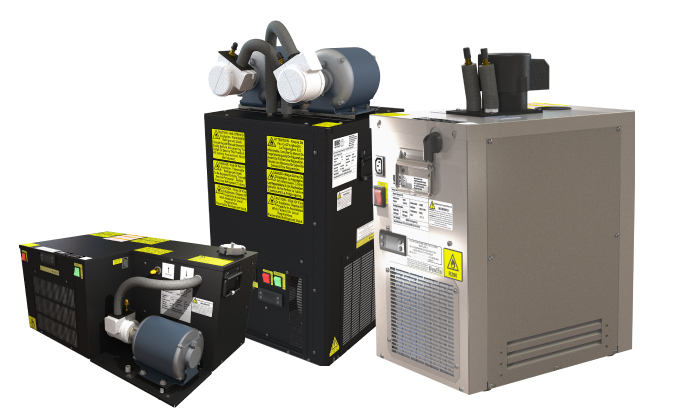
When selecting a glycol chiller for your draft beer system, it's essential to consider models that align with your specific operational needs. Below are some standout models:
UBC G30 Glycol Chiller
- Compressor Power: 1/3 HP
- Maximum Distance: 125 ft
- Glycol Tank Capacity: 2.9 gallons
- Pump Type: 80 gal/hr
- Thermostat: Digital
- Refrigerant: R290
- Dimensions (WxDxH): 28x18x14 inches
- Weight: 100 lbs
The G30 is ideal for medium-length beer line runs, offering efficient cooling with its 1/3 HP compressor and a digital thermostat for precise temperature control.
ChillPro 3200V Glycol Chiller
- Compressor Power: 3/8 HP
- Maximum Distance: 125 ft
- Glycol Tank Capacity: 5.5 gallons
- Pump Type: 80 gal/hr
- Thermostat: Digital
- Refrigerant: R290
- Dimensions (WxDxH): 16x18x31 inches
- Weight: 91 lbs (net)
The ChillPro 3200V is a vertical model suitable for installations with space constraints. Its larger glycol tank ensures stable temperature maintenance during peak usage.
ChillPro 1150V Glycol Chiller
- Compressor Power: 1/6 HP
- Maximum Distance: 25 ft
- Glycol Tank Capacity: 2 gallons
- Pump Type: SPC17/4
- Thermostat: Digital
- Refrigerant: R290
- Dimensions (WxDxH): 12x12x23 inches
- Weight: 47 lbs
Designed for short-distance beer line runs, the ChillPro 1150V is compact and energy-efficient, making it suitable for smaller establishments or specific applications within larger systems.
Each of these models features digital temperature controls for precise management, energy-efficient compressors, and are designed for easy integration into various draft beer systems. When choosing a glycol chiller, consider factors such as the length of your beer lines, available space for installation, and specific cooling requirements to select the most appropriate model.
Conclusion
Choosing the right glycol power pack for your draft system is critical to ensuring that your beer is served at the ideal temperature, preserving both taste and quality. From line length to the number of taps, various factors influence the glycol chiller size and type you need. Understanding these variables, along with the key features of glycol chillers, helps you make an informed decision that will enhance system efficiency and deliver consistent, perfectly chilled beer to your customers.
Ready to upgrade your draft system with the ideal glycol chiller? Contact us today for expert advice on choosing the right glycol power pack for your business, or browse our selection of high-quality glycol chillers to find the perfect match.