Elevate your beverage business with unbeatable glycol chiller deals


 Sign In
Jan 29 2024
3624
Draft Beer Towers: Your Bar’s Key to Profit and Customer Satisfaction
It’s Friday night, the bar is packed, and every second counts. Your beer tower is the difference between happy customers and a line at the bar.
Behind every perfectly poured pint is a system built for speed, consistency, and presentation. At the heart of it? The beer tower. For bars, restaurants, and breweries, the right tower isn’t just a tap handle—it’s a business decision. It affects service time, beer freshness, staff workflow, and even how your brand is perceived.
In this guide, we’ll break down how draft beer towers influence profit and customer experience, explain the differences between popular styles, and help you choose the perfect match for your commercial kegerator setup—whether you run a cozy taproom or a bustling sports bar.
Key Takeaways for Bar Owners
- Freshness Matters: The right tower setup ensures beer stays cold and carbonated until the pour.
- Service Speed: Multi-tap, ergonomic towers streamline bartender workflow.
- Return on Investment: Quality towers reduce waste and downtime, increasing profit.
- Glycol Cooling = Consistency: Critical for long-draw systems and premium service.
- Branding Power: Towers aren’t just functional—they reflect your bar’s personality.
Why Beer Towers Matter for Business
Think of your beer tower as the centerpiece of your draft system. It’s what customers see when they order a beer. But more than just a focal point, the tower directly affects performance, from the temperature of the beer to how quickly it can be served.
From a business standpoint, a high-quality beer tower contributes to:
- Customer Experience: A smooth pour without foam or inconsistency keeps customers happy and encourages repeat business.
- Operational Efficiency: Bartenders work faster with ergonomic, multi-tap towers.
- Profit Margins: Less waste from foamy pours and temperature fluctuations equals more sellable beer.
- Visual Identity: A custom ceramic or European tower adds a premium, branded touch to your setup.
When planning your draft system, the tower isn’t a place to cut corners. Choosing wisely boosts revenue and enhances your reputation. In a competitive hospitality landscape, details like this can make or break the customer experience.
Key Factors to Consider When Choosing a Tower
Number of Taps
The number of taps you need depends entirely on your business model and customer volume.
- Small Restaurants & Cafes: A 2-3 tap tower is usually enough to offer variety without overwhelming your space or budget.
- Neighborhood Pubs & Bars: 6-8 taps allow you to cover a full spectrum of beers—IPAs, lagers, stouts, and seasonal options.
- Breweries & Sports Bars: 10-12+ taps let you showcase your full range or provide a wide selection of rotating guest beers.
Choosing too few taps can limit your offering. Too many may lead to stale kegs and unnecessary complexity.
Location & Setup
There are two primary setups: direct draw and long draw.
- Direct Draw Systems use air-cooled lines and keep the keg close to the tower. Ideal for smaller operations with limited distance between keg and tap.
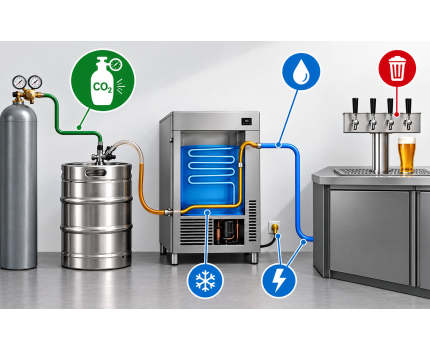
- Long Draw Systems use glycol-cooled lines, ideal for bars with walk-in coolers or remote keg storage. These systems ensure consistent temperature and carbonation even across long distances.
System integration is key. The tower, lines, keg fridge, and CO2 system must work seamlessly.
Material & Durability
- Stainless Steel: The gold standard. It’s durable, hygienic, and resistant to corrosion. Perfect for high-volume bars.
- Ceramic: Offers aesthetic flair and brand customization. Common in upscale or vintage-themed spaces.
- Chrome-Plated Brass: A more affordable option, but prone to wear and corrosion over time. Best for low-traffic or budget-conscious setups.
Durability affects more than lifespan—it impacts sanitation, beer taste, and your bottom line.
Ergonomics & Height
Beer towers should fit your bar layout and staff workflow.
- Height Considerations: Ensure there's enough clearance for tall glasses, especially under drip trays.
- Ergonomics: Towers with well-spaced taps reduce cross-contamination and allow faster service.
- Placement: The angle and reach should match the bartender’s movement for minimal effort and maximum speed.
These practical aspects are often overlooked but directly impact service quality and speed.
Types & Styles of Beer Towers
Column Towers
Column towers are the workhorses of the industry. These vertical, single-post units are:
- Simple to install
- Highly durable
- Available in 1 to 4-tap configurations
They fit compact bars and restaurants where space and reliability matter most.
Ceramic Towers
Known for their bold, retro aesthetic, ceramic towers bring personality to your bar. They are:
- Fully customizable with logos or patterns
- Great for vintage-style or boutique venues
- Available in various shapes and sizes
Ceramic doesn’t just pour beer—it makes a statement.
European Towers
Sleek and sophisticated, European-style towers offer:
- Premium chrome or stainless finishes
- Modern curved or angled designs
- A clean, high-end look for upscale venues
Perfect for restaurants or bars wanting to elevate their visual appeal.
T-Style Towers
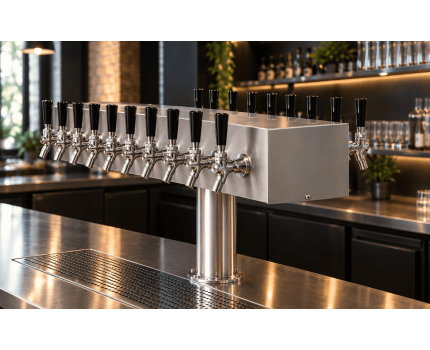
These towers are designed for volume. T-style towers feature a horizontal bar with 4 to 12 taps and are ideal for:
- Sports bars
- High-traffic pubs
- Events with heavy beer turnover
Easy to access from multiple angles, they speed up service during peak hours.
U-Style Towers
Featuring double pedestals, U-style towers are built for:
- Long bars
- Multi-bartender operations
They distribute taps across a wider surface, reducing wait times and boosting staff efficiency. A perfect solution when speed and volume are essential.
Real-World Examples: How Towers Transform Businesses
Sports Bar Case
Problem: A high-traffic sports bar struggled with long lines and service delays due to just 4 taps. Customers were waiting too long, and staff was overwhelmed.
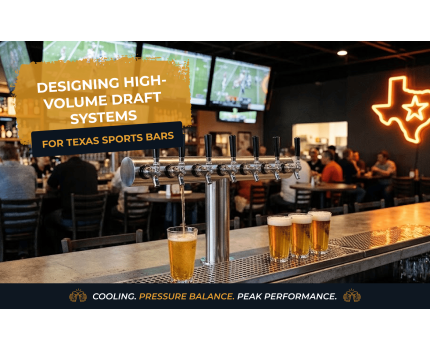
Solution: They upgraded to a 12-tap T-style tower, increasing the number of bartenders who could pour at once and doubling their draft selection.
Result: Draft beer sales rose 28% in the first three months, and average wait times at the bar dropped dramatically. The change not only improved revenue but created a faster, smoother customer experience.
Brewery Case
Problem: A small craft brewery was losing identity in a crowded market. Their beer quality was inconsistent, and they struggled to reinforce their brand.
Solution: Installing an 8-tap glycol-cooled European tower resolved both issues. It kept beer fresh and allowed them to design the tower with a unique, branded look.
Result: Guests began sharing photos on social media, and flights became more popular due to improved pour consistency. The brewery solidified its brand identity and increased merchandise and taproom sales.
Upscale Restaurant Case
Problem: Beer was treated as a casual beverage, outshined by wine and cocktails. Presentation lacked the elegance expected by diners.
Solution: The restaurant invested in custom ceramic towers that matched its high-end aesthetic.
Result: Beer became a premium item on the menu, with per-glass prices increasing by 15-20%. Patrons were more willing to pair upscale dishes with beer, boosting overall beverage revenue.
How Beer Towers Pay for Themselves
Beer towers aren’t just operational tools—they’re revenue engines. By enabling faster service, reducing beer waste, and creating upselling opportunities, towers often pay for themselves within months.
Let’s break it down:
- Faster Service: With more taps and better ergonomics, bartenders serve more pints per hour.
- Reduced Waste: Proper temperature and line cooling = less foam and fewer dumped beers.
- Higher Sales: Custom or premium towers increase perceived value, leading to more beer flights and high-margin pours.
Example ROI: Adding 4 new taps in a busy bar = approx. 60 extra beers/night at $7 each = $420/day = ~$12,600/month. Even with install and equipment costs, ROI can hit within 6 months.
Installation & Maintenance
Why Professional Setup Matters
Setting up a draft tower isn't just plug-and-play. Proper CO2 calibration, insulated lines, and leak prevention can make or break your draft system.
Hiring professionals ensures:
- Consistent pour quality
- Reduced risk of gas/foam issues
- Long-term savings from avoided mistakes
DIY may seem cheaper but often leads to higher maintenance costs over time.
Components That Support Towers
Your tower is only as good as its supporting cast:
- Faucets & Shanks: Deliver beer from the line to the glass, must match the tower specs.
- Drip Trays: Keep surfaces clean and reduce spillage.
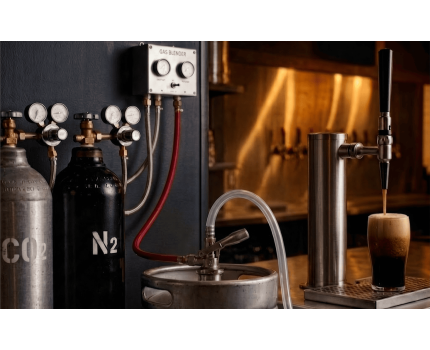
- Draft Beer Dispense System Components: Regulators, lines, CO2 tanks, and more.
Each piece should be integrated into your setup for optimal performance.
Cleaning Best Practices
Regular maintenance protects beer quality and your system's lifespan:
- Lines: Flush every 2 weeks to prevent buildup and bacteria.
- Faucets: Disassemble and clean daily.
- Towers: Wipe down regularly, especially around taps.
Neglecting these steps can lead to off-flavors, infections, and customer complaints.
Why Bars Choose UBC Group USA
With over 10 years of experience in the draft beverage industry, UBC Group USA is a trusted partner for bars, breweries, and restaurants nationwide.
Here’s what sets us apart:
- Commercial-Grade Equipment: Built to last under high-volume use.
- B2B Pricing: Wholesale accounts and bulk discounts available.
- Fast Nationwide Shipping: Get what you need, when you need it.
Frequently Asked Questions
How many taps do I need?
Depends on your venue size and beer list. Small bars do well with 2-4 taps, while high-volume venues often go with 8-12+.
Air-cooled vs glycol-cooled?
Air-cooled is for short distances (direct draw). Glycol-cooled is best for long-draw systems, ensuring consistent temperature over 25+ ft.
Why stainless steel over chrome?
Stainless steel is more durable, corrosion-resistant, and easier to clean. Chrome is cheaper but wears faster.
Are ceramic/European towers practical in busy bars?
Yes—they're durable and effective, especially when combined with stainless internals. Ceramic towers also offer branding benefits.
Can upgrading towers increase profits?
Absolutely. More taps = more variety = higher sales. Upgrades also improve efficiency and reduce waste.
Cleaning & maintenance frequency?
Lines = every 2 weeks. Faucets = daily. Towers = weekly wipe-down.
Does UBC provide installation support?
We offer guidance and can recommend trusted installation partners nationwide.
How to match towers to drip trays/faucets?
Choose trays/faucets designed to fit your tower height and spacing. Our support team can help.
Which tower style fits a sports bar vs fine dining?
Sports bars thrive with T-style/U-style towers. Fine dining venues lean toward ceramic or European designs.
What’s the average ROI timeframe?
Many bars recoup tower costs within 6 months through higher beer sales and reduced waste.
Conclusion / Final Word
Your beer tower is more than a tap—it’s a profit center, a brand touchpoint, and a reflection of your customer experience.
From ceramic showpieces to high-volume T-style units, every tower style has a strategic advantage. Whether you're redesigning your bar or expanding your tap list, investing in the right draft beer tower is one of the smartest decisions you can make.