Elevate your beverage business with unbeatable glycol chiller deals


 Sign In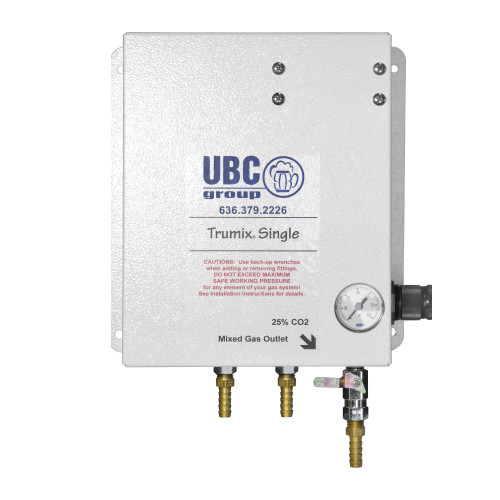
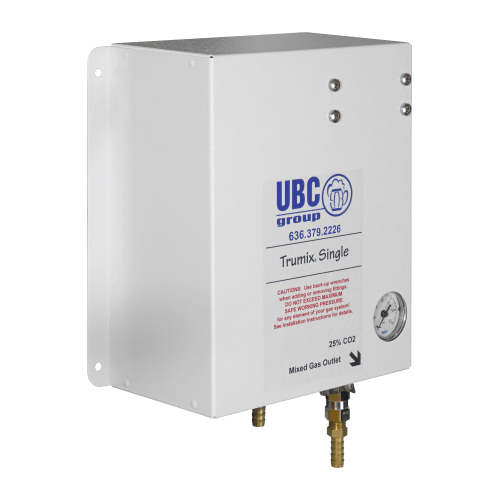
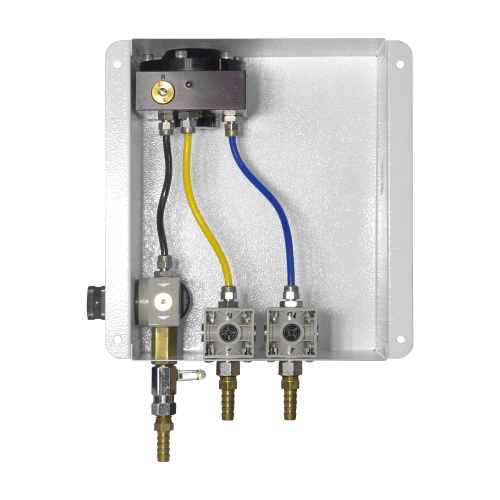
McDantim Trumix Gas Blender Panel, Single Outlet, up to 30 kegs/hr, 60 CO2 / 40 N
- SKU: TM100HF
 12 Months Warranty
 Fast delivery
 Easy returns
 Product support
McDantim Trumix Gas Blender Panel, Single Outlet, up to 30 kegs/hr, 60 CO2 / 40 N |
|
| GAS BLENDERS | Single Gas Blender |
Our website is designed for wholesale industry customers only. If the description for this product is missing, please contact your UBC Sales Representative for detailed product information.
Generations of women in the Smith family had prepared pot roast the same way: cutting the ends off the roast. The youngest daughter asked why, and after a chain of weird conversations, the answer was: The pot roast didn’t fit in the super small oven the great-great-grandmother had, so she chopped the ends off. If it ain’t broke, don’t fix it. But sometimes, something we are used to doing or experiencing needs another viewpoint for improvement.
People are used to wasting beer. Bartenders open the tap and stick the glass under the faucet. Owners think the 2 gallons of beer that gets dumped from the bucket at the end of the night is normal. One of our first customers was a college bar with a direct draw and 60+ beers on tap. He told us that the blender saved him over $2,000/month in wasted beer compared to using 100% CO₂.
Just because we’ve done it this way for generations, or because everyone else does it that way, doesn’t mean that it is the only way to do it. The cost of the correct mixed gas can save you the installation cost several times a year and improve your sales.
Another customer upgraded their gas supply without telling any staff and found a 30% increase in sales immediately. The initial beer ordered with dinner was good, so one good beer deserves another. Just because we don’t think it’s broken doesn’t mean we can’t fix it.
If you’re seeing these foaming issues and would like some guidance, call us or your draught system technician. Maybe your draught gas supply would benefit from mixed gas.
Carbon Dioxide Nonsense
You need a leak check buddy. Do you have your leak check buddy?
Safety concerns take up a fair amount of my time as the safety program manager here at McDantim. We work with high-pressure gases, asphyxiant gases, and normal office dangers, like papercuts and standing on wheelie chairs when no one is looking to water one of the 25 plants in my office. Now, the last concern is totally directed at me being a lazy dum-dum who doesn’t want to go get a step stool late on a Friday afternoon, but I SHOULD KNOW BETTER. We are fortunate to have checks in place to make sure everyone is safe on and off-site. We don’t go off-site very often, but when we do, it’s for training purposes: draught system troubleshooting or installs with our administrative staff so we can help you as much as possible. Plus, information and education are our pride points to provide the best customer service we can. While off-site, we have portable CO₂ monitors for our employees to wear. Not all coolers are equipped with CO₂ monitors, so better safe than sorry.
We get a fair amount of tech calls about leaking systems. These calls are always a little nerve-wracking for us because of the hazards associated with CO₂ intoxication. “If you think you have a leak, have someone with you or watching you while you check.” We had a horrendously distressing tech call a few months back where an end user thought she had a leak. She went into the cooler and felt a little dizzy and called us for assistance. Dan took this call and told her to have someone with her or watch her while she checked. While on the phone, the other line disconnected. We proceeded to freak out here at McDantim, and her employee called and said she was passed out on the floor in the cooler. Holy crap on a cracker. Get her out of there, call 911. Call us back. Thankfully, she is fine. I even talked with a gal here in Montana who was driving to a beer fest, transporting her CO₂ and jockey box in the car when she started feeling dizzy. She knew to roll down her windows and pull over to check the CO₂ cylinder, which was leaking.
We want you to be safe when you check your system. We recommend CO₂ Meter for your CO₂ monitors at your facility and for out-of-office troubleshooting.
Check that an adequate supply of both Carbon Dioxide (CO₂) and Nitrogen (N₂) gases. The Trumix® Gas Blender is designed to shut down if either inlet gas runs out. Running just CO₂ or N₂ through the blender will ruin the beer, though this is not possible under normal operating conditions.
1. Ensure that the supply gases have adequate pressure for panel operation and adjust as necessary.
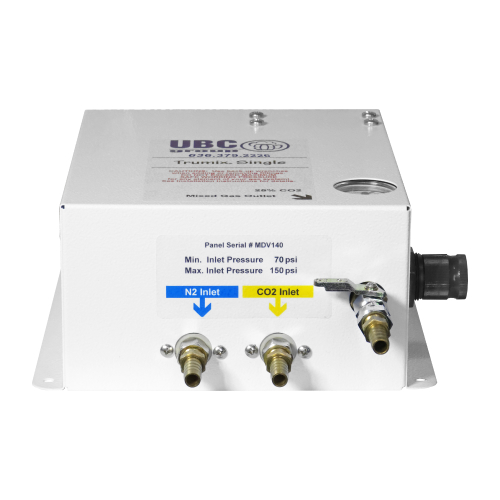
2. Locate the input gas connection tubes: (2) one for CO₂ and one for Nitrogen (N₂.) They are normally the tubes closest to the wall. Locate the label that is affixed to the gas connection face (normally bottom facing the ground.) This label lists the minimum and maximum inlet pressures for the blender as well as the unit’s serial number. Adjust the supply gas regulators to the appropriate minimum setting to ensure proper function. A good “rule of thumb” is to set the supply gas pressure to about 10 psi higher than the minimum recommendation on the panel and provide plenty of gas to the internal input pressure regulators.
3. Locate the mixed gas outlet pressure gauge(s) on the panel (TM-1, TM-2) face. The panel face labeling indicates their location.
a. New blender units come factory preset to 15 psi.
b. Installed and functioning units will be adjusted by the installing technician to meet the requirements of the draught system. In some cases, the installing technician will write the pressure setting with a marker close to the appropriate output pressure gauge. If not, pressure is indicated on the gauge and supply pressure is adequate. Pull the gray knob adjacent to the gauge out (away from the panel.) It should move about 1/8” and make an audible click. Increase the pressure by turning the knob clockwise (either blend).
c. It is best if the mixed gas outlet ball valve(s) are closed during this procedure.
4. Locate the outlet ball valve(s) on the panel assembly (the front panel labeling indicates their location. Make sure they are on and supply gas to the rest of the draught system.
Other Products you may like

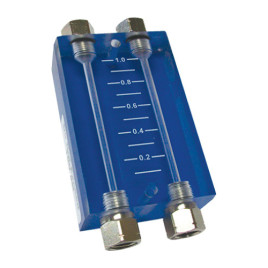
Double In-line leak indicator
SKU: MV035