Elevate your beverage business with unbeatable glycol chiller deals


 Sign In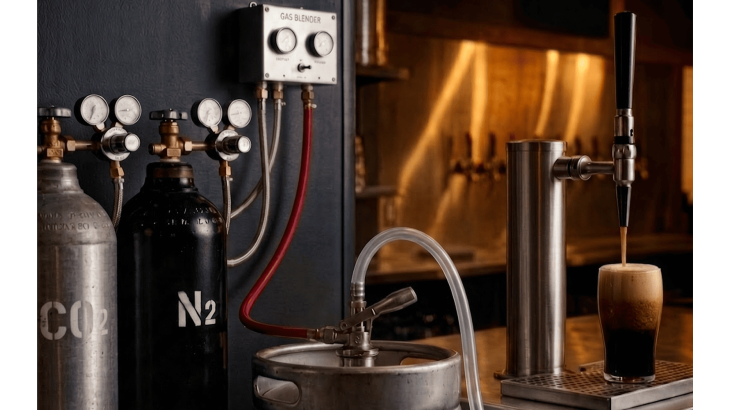
Sep 14 2026
15
Stout and Nitro Beer Dispensing: Gas, Faucet and Pressure Requirements
Not every stout should be poured with nitrogen. Some stouts use a standard CO₂ draft setup, while nitrogenated beers require a specific gas blend, higher applied pressure, and a stout faucet.
A reliable nitro pour starts with the beer specification. Gas, pressure, temperature, coupler, and faucet must all match the product.
KEY TAKEAWAYS

Stout is a beer style; nitro describes how the beer is conditioned and dispensed.

Nitro beer normally uses a blend of CO₂ and nitrogen, not pure nitrogen.

A stout faucet creates the cascade through a restrictor plate.

Serving pressure depends on the beer, temperature, and system layout.

The correct coupler and regular cleaning are essential for stable pours.
Stout vs. Nitro Beer: What Is the Difference?
Stout does not automatically mean nitrogenated beer. A stout may be conventionally carbonated and served through a standard CO₂ system, or it may be produced specifically for nitro dispensing.

Before setting up the tap, confirm:
- the brewery’s recommended gas blend
- serving temperature
- carbonation level
- keg valve and coupler type
- whether a stout faucet is required

What Gas Is Used for Nitro Beer?
Nitro beer usually requires a mixture of carbon dioxide and nitrogen. CO₂ helps maintain the beer’s existing carbonation. Nitrogen provides enough pressure to move the beer through the restrictor faucet without adding excessive carbonation.
A common blend is:
- 25% CO₂
- 75% Nitrogen
Some beers may use a 30/70 blend or another specification. The correct ratio should come from the brewery, distributor, or system calculation. Bars can use premixed beverage-gas cylinders or produce the required blend on site with gas blenders. On-site blending is especially useful when multiple nitro lines require a consistent gas supply.
Why Pure Nitrogen Is Usually the Wrong Choice
Pure nitrogen can push beer through a line, but it does not provide enough CO₂ pressure to preserve the beer’s residual carbonation.
Gas Setup |
System Effect |
Result on Beer |
|---|---|---|
| Pure Nitrogen | Pushes beer through the line but lacks CO₂ pressure. | Over time, it becomes flat, weak in aroma, and inconsistent in head formation. |
| Pure CO₂ | Creates the opposite pressure risk. | May overcarbonate a low-carbonation nitro beer. |
| Gas Blend | Provides enough pressure to move beer through the system. | Preserves the beer and remains stable from the first pour to the last. |
The gas blend must preserve the beer while also providing enough pressure to move it through the system.
What Makes a Stout Faucet Different?
A standard beer faucet allows relatively free flow. A stout faucet adds resistance through a restrictor plate with several small holes.
Action |
Result on Beer |
|---|---|
| Dissolved nitrogen is released through the restrictor plate. | Creates the cascading effect and a slower, more controlled pour. |
| Beer passes through the flow straightener. | Produces a dense, creamy head and a smoother texture. |
The restrictor plate and flow straightener are essential parts of stout beer faucets. Removing the plate may increase flow, but it also removes the presentation and texture expected from nitro beer. The faucet should be opened fully during the main pour. Holding it partly open can create turbulence and excessive foam.
UNDERSTANDING NITRO BEER PRESSURE
Nitro beer usually requires higher applied pressure than standard draft beer because the restrictor plate adds significant resistance. There is no universal PSI for every nitro system.
Beer & Gas Factors |
System Layout |
Hardware Resistance |
|---|---|---|
| Dissolved CO₂ level | Line length and diameter | System resistance |
| Gas-blend % | Vertical rise | Faucet resistance |
| Keg temperature | Elevation | Brewery's specification |
Compatible CO₂ and nitrogen regulators must provide the required pressure range and connect correctly to the selected gas cylinder. Do not raise pressure simply because the beer pours slowly. A blocked restrictor, incorrect coupler, warm beer, or restricted line may be the real cause.
TEMPERATURE MUST BE CHECKED BEFORE PRESSURE
Temperature affects gas balance and pour quality. Warm nitro beer may produce excessive foam or an unstable cascade, while changing pressure to compensate can create additional problems.
Checkpoint |
Troubleshooting & Action |
|---|---|
| Source: in the keg cooler & at the keg | Kegged nitro beer is commonly stored cold, but the brewery's recommended serving range should take priority. |
| Dispense: near the faucet & in the poured beer | If the first pour is warm and later pours improve, inspect tower or line cooling before adjusting the regulator. |
CHOOSE THE CORRECT KEG COUPLER
The beer brand and keg valve determine the coupler. Stout color or style does not. Before connecting the keg, confirm the valve type with the brewery or distributor.
Coupler Type |
Beer Compatibility |
|---|---|
| U-type | Guinness and some related products |
| G-type | Selected imported beers |
| S-type | Certain European brands |
| D-type | Many American craft kegs |
The wrong keg coupler may fail to engage properly, restrict flow, or leak beer and gas. Always inspect the probe, seals, and check valves for wear or residue.

Direct-Draw vs. Long-Draw Nitro Systems
In a direct-draw setup, the keg is close to the faucet. The system still needs enough pressure to overcome the line and restrictor plate without creating excessive flow.
Long-draw systems must also account for:
- extended line length
- vertical rise
- trunk-line resistance
- glycol cooling
- fittings and valves
- pressure loss across the system
Bars serving both standard beer and nitro products often need separate pressure zones. Regulator panels can help manage different products without placing every keg on the same gas blend and pressure.
The nitro blend should match the beer’s carbonation requirement, not simply the length of the line.
How to Pour Nitro Stout Correctly
Use a clean glass and open the faucet fully.
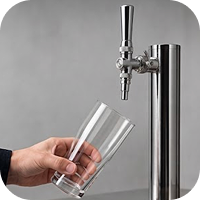
1. Hold the glass at approximately 45 degrees
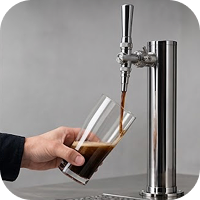
2. Hold the glass at approximately 45 degrees
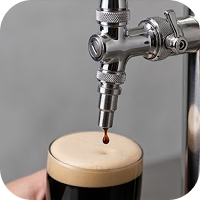
3. Bring the glass upright as it fills
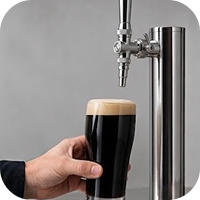
4. Allow the cascade to settle
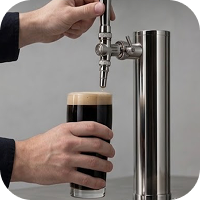
5. Finish the head using the faucet’s reverse position, where supported
Do not let the faucet nozzle touch the glass or beer. Partially opening the faucet can create unnecessary turbulence and foam.
COMMON NITRO DISPENSING PROBLEMS
Issue |
Possible Causes & Checks |
|---|---|
| No Cascade | Regular beer connected to a nitro system, missing restrictor plate, standard faucet instead of a stout faucet, incorrect gas blend, or insufficient applied pressure. |
| Beer Pours Too Slowly | Blocked restrictor holes, dirty faucet parts, low gas pressure, restricted or kinked line, or coupler blockage. |
| Excessive Foam | Warm beer, incorrect gas, poor system balance, or a faucet that is not fully opened. |
| Beer Becomes Flat | Gas blend contains too little CO₂, beer is running on pure nitrogen, or pressure is set below the required equilibrium level. |
| No Beer Flow | Gas valve is closed, cylinder is empty, incorrect coupler is engaged, restrictor is blocked, or coupler is damaged. |
Review how keg couplers affect flow, pressure, and pour quality before changing system pressure.