Elevate your beverage business with unbeatable glycol chiller deals


 Sign In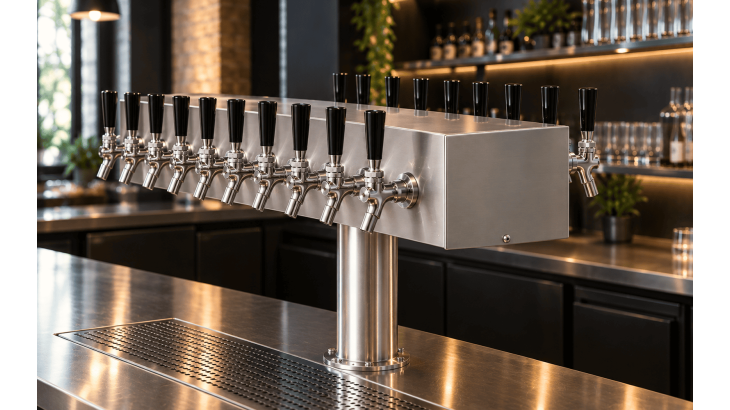
Sep 25 2026
14
How to Add More Taps Without Replacing Your Entire Draft System
Adding more taps does not always require rebuilding the entire draft system. In many bars, restaurants, breweries, and taprooms, existing cooling, gas supply, keg storage, or line infrastructure can remain in place while selected components are expanded.
However, adding another faucet is only one part of the upgrade. Every new tap also needs a product connection, adequate cooling, pressure control, keg space, and cleaning access. Before buying new equipment, operators should review the complete draft beer system components setup to determine what can be reused and what has reached its capacity.
KEY TAKEAWAYS

Existing draft equipment can often be reused if it has enough capacity.

Adding faucets alone does not create complete new product lines.

Keg storage, cooling, tubing, and gas controls must support every added tap.

An existing tower may be modified, replaced, or supported by a second dispense point.

A partial upgrade is not practical when the current infrastructure is already at its limit.

Start With a Capacity Audit of the Existing Draft System
The first step is to document how the current system is built. Operators should confirm whether it is direct-draw or long-draw, where the kegs are stored, how far the beer travels, and which cooling and gas components are already installed.
The audit should answer several practical questions:
- Is there enough refrigerated space for additional kegs?
- Are unused product lines already installed?
- Can the current tower accept more faucets without becoming crowded?
- Does the gas system have room for additional connections and pressure zones?
- Can the existing cooling equipment handle more lines?
- Is there enough space for installation, cleaning, and bartender access?
The goal is to identify the actual limitation. In some systems, the tower is the only component that needs to change. In others, storage, cooling, or line capacity may make the upgrade more involved.
WHICH PARTS OF THE EXISTING SYSTEM CAN USUALLY BE REUSED?


OPTION 1: ADD FAUCETS TO THE EXISTING TOWER
Adding faucets to the current tower may be the simplest upgrade when the tower has enough physical space and the supporting system already includes unused product lines.
UPGRADE CONSIDERATION |
SYSTEM REQUIREMENT |
IMPACT ON SERVICE |
|---|---|---|
| Physical Modifications | Operators must confirm enough spacing between faucets and handles, internal cooling reach, drip tray capacity, and tower stability. | Ensures bartenders can operate each faucet without obstruction and the drip tray manages the wider pouring area. |
| Additional Components | Each new faucet will also require a shank, product tubing, fittings, keg coupler, and gas connection. | If no spare product line is available, the work extends beyond the tower itself, increasing installation complexity. |
| Avoiding Overcrowding | Spacing must remain adequate for staff to identify, pour, clean, and maintain each product. | More taps only improve the system when service efficiency and maintenance access are not compromised. |
OPTION 2: REPLACE ONLY THE TOWER OR ADD A SECOND DISPENSE POINT
When the existing tower cannot accept more faucets, replacing only the tower may still preserve most of the current draft infrastructure.
UPGRADE CONSIDERATION |
SYSTEM REQUIREMENT |
IMPACT ON SERVICE |
|---|---|---|
| Replacing the Tower | Bars can move to higher-capacity draft beer towers while retaining compatible cooling, gas, keg storage, and line components. | Preserves most of the current draft infrastructure while adding capacity. |
| Second Dispense Point | Requires properly routed product lines, cooling at the new point of dispense, drainage, cleaning access, and enough working space for staff. | Improves workflow in busy venues by utilizing a second tower, separate station, wall-mounted dispenser, or underbar pouring point. |
| System Reliability | The new tower or station must connect to a system that can support every added product consistently. | Guarantees quality and stability, rather than simply creating more empty faucet positions. |
Check Whether the Trunk Line Has Spare Capacity
In a long-draw system, the trunk line may be the main limit on expansion. It carries the product lines between keg storage and the dispense point, so every added tap needs a dedicated line through that route.
Some systems are installed with unused product lines for future growth. If spare lines are already available inside the trunk line, adding taps may require only new connections, dispense hardware, and system balancing.
If every line is already active, the options may include: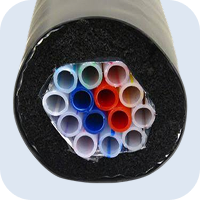
installing a second trunk
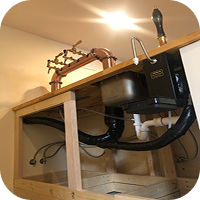
replacing the existing trunk with a higher-capacity assembly
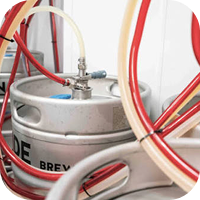
creating a separate route for the new products
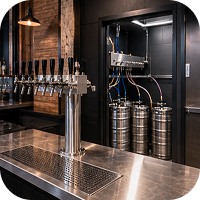
adding another dispense point closer to keg storage
Operators should also confirm that the existing tubing is suitable for the beverages being added. Beer, wine, cocktails, and other products may have different line and material requirements.
Can the Existing Glycol Chiller Handle More Taps?
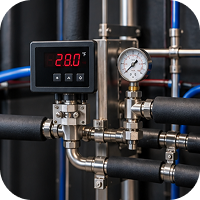
Adding product lines increases the cooling demand on a long-draw system. Even when the current chiller maintains acceptable temperatures, it may not have enough reserve capacity for additional taps.
The review should consider:
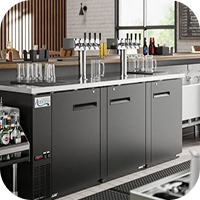
total distance from keg storage to the faucets
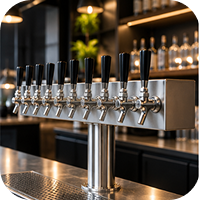
number of existing and planned product lines
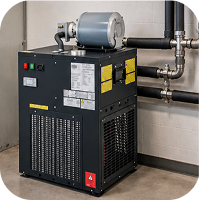
ambient temperature along the route
tower or dispense-point cooling requirements
glycol circulation and return temperature
the current chiller’s workload during busy service
An undersized cooling system may lead to warmer first pours, excess foam, inconsistent temperature, or longer recovery periods during peak demand.
The chiller should therefore be evaluated as part of the expansion plan rather than after new taps have already been installed. A working unit is not automatically a correctly sized unit for the upgraded system.
Expand the Gas Distribution and Pressure Controls
Every new keg needs a dependable gas connection, but adding more taps does not always mean placing every product on the same pressure setting. Different beverages and beer styles may require separate pressure control to pour correctly.
Depending on the expansion, the gas side may need:

additional secondary regulators
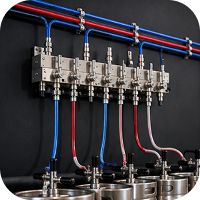
a larger gas manifold or air distributor
new gas tubing and fittings
individual shutoff points
separate pressure zones
gas blending for specialty products
Organized regulator panels can make pressure management easier in multi-line systems by keeping controls accessible and clearly assigned to specific products or groups of taps.
Independent control becomes especially important when the expanded lineup includes nitro beer, wine, cocktails, carbonated water, or beers with different carbonation requirements. Connecting every new keg to one shared pressure setting may create inconsistent pours or force staff to make frequent adjustments.
The gas expansion should be planned at the same time as the new product lines. Waiting until the faucets are installed can lead to improvised connections, limited control, and harder troubleshooting.
DO YOU NEED ADDITIONAL BEER PUMPS OR FOB DETECTORS?
Not every expanded draft system needs beer pumps or FOB detectors. These components are more common in long-draw, higher-volume, or remote installations where product delivery and keg-change waste require additional control.
COMPONENT / CONSIDERATION |
SYSTEM FUNCTION & APPLICATION |
RESULT ON PERFORMANCE |
|---|---|---|
| Beer Pumps | Add when the system needs help moving beer over distance without relying on excessive keg pressure. | Moves beer consistently over long runs without risking over-carbonation in the keg. |
| FOB Detectors | Use to automatically stop the beer flow the moment a keg empties. | Reduces foam and minimizes product loss after frequent keg changes. |
| Evaluation Factors | Review the distance from keg to faucet, line resistance, number of products, service volume, delivery method, and keg change frequency. | Ensures components are correctly matched to the installation, avoiding unnecessary complexity. |
They should be added only when the system design calls for them. A simple direct-draw expansion may not need either, while a larger long-draw upgrade may benefit from both.
WHEN A PARTIAL UPGRADE IS NOT ENOUGH
A targeted retrofit works only when the existing system has enough capacity and remains in good condition. In some cases, adding new taps exposes limitations that make a larger rebuild more practical.
UPGRADE LIMITATION |
WHEN A MORE EXTENSIVE REBUILD IS NECESSARY |
|---|---|
| Cooling & Storage Constraints |
|
| Line & Hardware Limitations |
|
| Maintenance & Accessibility |
|
Operators should also compare the cost of adapting several undersized components with the cost of replacing the limiting section properly. Keeping old equipment is not a saving if it creates recurring foam, cooling, pressure, or maintenance problems.
The goal is to preserve useful infrastructure, not to force an expansion into a system that cannot support it reliably.
A Step-by-Step Draft System Expansion Plan
A structured plan helps prevent the tower, cooling, and gas sides from being upgraded separately.

Define how many taps will be added and which products they will serve.

Confirm that refrigerated keg storage can support the expanded lineup.

Inspect the tower, bar top, drip tray, and bartender workspace.

Check whether spare product lines already exist.

Review the added cooling demand.

Plan gas connections and separate pressure requirements.

Select the necessary faucets and shanks, couplers, tubing, and fittings.

Install and label each new line.

Balance the pressure and flow for every product.

Clean and test the complete system before service.
Every new line should also be added to the regular cleaning and maintenance schedule. The expansion is not finished until the added taps pour consistently and remain easy to service.
Final Thoughts
Adding more taps does not always require replacing the entire draft system. Many bars can expand by reusing cooling, storage, gas, or line infrastructure that still has sufficient capacity.
The smartest approach is to identify the actual limitation before purchasing equipment. Sometimes the answer is a few additional faucets. In other cases, the tower, trunk, cooling, or gas controls need a targeted upgrade.
A successful expansion should make the draft program more flexible without creating new problems with temperature, pressure, cleaning, or staff workflow.
Frequently Asked Questions
In many cases, yes. The existing system must have enough keg-storage, product-line, cooling, gas, and dispense capacity to support the additional taps.
Yes, when the tower has sufficient space, can be modified safely, and can provide proper cooling to the added faucet positions.
Not always. If unused product lines are already installed in the existing trunk, they may be activated. A new or larger trunk may be required when all existing lines are already in use.
Possibly, but its available capacity must be checked. A chiller that works for the current system may not have enough reserve capacity for more product lines or another dispense point.
Every keg needs a controlled gas connection, but separate regulators depend on the products and required pressures. Beverages with different pressure needs should not automatically share the same setting.
Yes, provided the system can route, cool, pressurize, clean, and drain the new dispense point properly.
At minimum, the refrigerated space must accommodate the additional connected kegs. Operators should also consider backup inventory and enough room for staff to change kegs safely.
They can share parts of the supporting infrastructure, but they may require dedicated product lines, compatible tubing, different pressures, or separate gas blends.
Full replacement may be justified when several major components are already undersized, incompatible, damaged, or difficult to maintain. The decision should be based on the complete system rather than the tap count alone.
Contact Us today so our sales team answer all your questions and prepare a quote tailored to your needs.