Elevate your beverage business with unbeatable glycol chiller deals


 Sign In
Sep 29 2026
19
Learn how to audit beer, gas, water, and energy loss across a commercial draft system and identify leaks, foam, cleaning waste, and cooling issues.
Draft System Waste Audit: Where Beer, Gas, Water and Energy Are Lost
Draft system waste is not limited to foam in the drip tray. Bars may also lose gas through small leaks, water during inefficient cleaning, and energy through poorly maintained cooling equipment.
A waste audit follows the full system from keg storage to the faucet. Reviewing the complete draft beer system components setup helps operators identify repeated losses before replacing equipment or blaming staff.
KEY TAKEAWAYS

Draft system waste includes beer, gas, water, cleaning chemicals, and energy.

Temperature and pressure problems can create several types of loss at once.

Some operational loss is unavoidable, but repeated variance should be investigated.

A useful audit combines records, measurements, and physical inspection.

Safety-related gas leaks should always be addressed first.
Set the Boundaries of the Audit
Start by mapping every component involved in storing, moving, cooling, and dispensing the product.
AUDIT PHASE |
REQUIRED ACTION |
KEY COMPONENTS & RECORDS |
|---|---|---|
| System Mapping | Map all physical equipment from keg to glass. |
|
| Data Collection | Choose a defined audit period (e.g., one month or representative weeks). |
|
| Baseline Setup | Establish a baseline to track improvements accurately. | Without consistent records, it is difficult to tell whether a change actually reduced waste. |
The gas blend must preserve the beer while also providing enough pressure to move it through the system.
Beer Loss: Where Product Disappears
Beer loss can occur at several points:
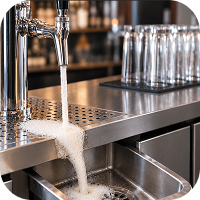
foam sent to the drain
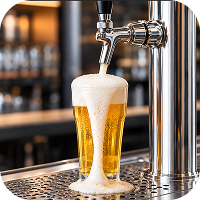
overfilled glasses
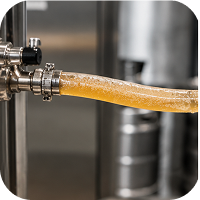
product left in lines before cleaning
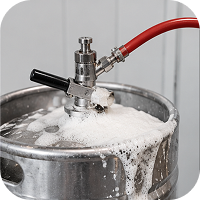
foam during keg changes

samples, comps, and spills
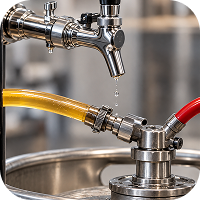
leaks at faucets, tubing, fittings, or couplers
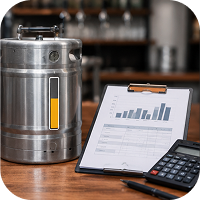
unexplained differences between keg volume and recorded sales
Foam is often a symptom rather than the root problem. Warm beer, unstable pressure, dirty lines, poor pouring technique, or inadequate tower cooling may all increase drain waste.
Do not use one universal acceptable waste percentage. Establish a baseline by product and tap, then investigate repeated changes from normal performance.

How to Measure Beer Yield
Compare the beer received with the beer actually sold. Review:
- starting keg volume
- POS-recorded pours
- samples and comps
- cleaning loss
- documented spills
- product remaining in the keg
- unexplained variance
Useful records include keg-change logs, waste sheets, flow-meter data, and periodic physical inventory.
Not every variance means theft. Incorrect serving sizes, foam, unrecorded samples, product mapping errors, and calibration issues can also affect the numbers.
Keg-Change and Line Loss
When a keg empties, gas can enter the product line and create foam after the replacement keg is connected. Repeatedly pouring until the line clears wastes both beer and service time.
FOB detectors are designed to stop flow when a keg empties, helping keep the line full of beer. This can reduce foam during keg changes, especially in long-draw systems.

Operators should also record:
- how often each keg is changed
- how much beer is discarded during restart
- whether the line must be vented repeatedly
- whether the same taps show higher changeover loss
Unusually high loss may point to a damaged FOB, poor venting procedure, pressure imbalance, or another system issue.
GAS LOSS: WHERE CO₂ AND NITROGEN ESCAPE
Suspected CO₂ leaks should be treated as a safety issue and checked with proper detection equipment and procedures.
AUDIT CATEGORY |
SYSTEM POINTS & INDICATORS |
OPERATIONAL IMPACT & DIAGNOSIS |
|---|---|---|
| Common Leak Points | Gas may be lost through cylinder connections, regulator fittings, gas tubing, manifolds, shutoff valves, pumps, blenders, worn seals, or damaged keg couplers. | Creates hidden waste and potential safety hazards in storage or dispensing areas. |
| Warning Signs | Watch for cylinders emptying faster than usual, pressure dropping when the bar is closed, or repeated regulator adjustments. | Often results in unstable pours across several taps simultaneously. |
| Usage Tracking | Gas use should be regularly compared with normal sales volume and cylinder-change history. | A sudden increase often points directly to a leak or an equipment problem rather than normal operations. |
PRESSURE PROBLEMS INCREASE BEER AND GAS WASTE
Properly functioning CO₂ and nitrogen regulators help maintain stable pressure, but there is no single PSI setting that works for every draft system.
AUDIT CATEGORY |
SYSTEM POINTS & INDICATORS |
OPERATIONAL IMPACT & DIAGNOSIS |
|---|---|---|
| Symptoms of Incorrect Pressure | Incorrect pressure can cause excessive foam, flat or over-carbonated beer, and slow pours. | Leads directly to frequent manual adjustments, higher gas consumption, and inconsistent keg yield. |
| System Evaluation | Pressure must be reviewed together with product temperature, line resistance, elevation, gas blend, and system layout. | Adjustments cannot be made in isolation; all physical and environmental factors must be considered together. |
| Root Cause Analysis | Staff are observed regularly adjusting pressure settings to correct foaming issues at the tap. | The underlying issue may be temperature, line balance, or equipment condition rather than the regulator setting alone. |
Water and Chemical Loss During Line Cleaning
Line cleaning always uses water and displaces some beer, but poor procedures can increase both losses.
Audit:

beer left in each line before cleaning
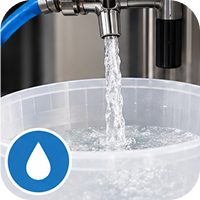
water used for flushing
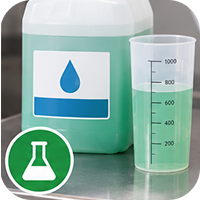
cleaner concentration
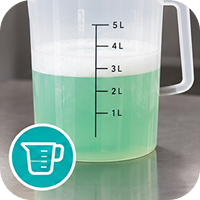
amount of mixed solution
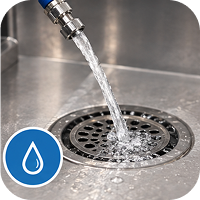
rinse-water volume
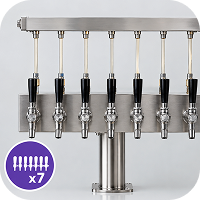
number of lines cleaned per cycle
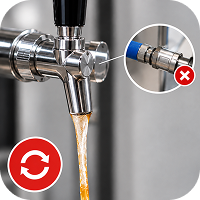
repeated flushing caused by incorrect setup
Long-draw systems and larger-diameter lines hold more product and require more cleaning fluid. Operators should calculate line volume rather than prepare excess solution by habit.
The goal is not to reduce water below safe sanitation requirements. It is to use the correct amount and complete the process properly the first time.
REDUCE CLEANING WASTE WITHOUT REDUCING QUALITY
Use suitable installation and maintenance tools to prepare, circulate, and verify cleaning solution accurately.
AUDIT CATEGORY |
SYSTEM POINTS & INDICATORS |
OPERATIONAL IMPACT & DIAGNOSIS |
|---|---|---|
| Preparation & Measurement | Measure line volume, mix only the required solution, and follow chemical concentration and contact-time instructions. | Prevents over-mixing of cleaning chemicals and ensures the solution performs effectively without excess waste. |
| System Execution | Connect compatible lines into cleaning loops, use recirculation where appropriate, and rinse until the cleaner is fully removed. | Maximizes physical and chemical cleaning efficiency while guaranteeing the system is safe before resuming service. |
| Tracking & Frequency | Record cleaning-related beer loss separately and maintain scheduled cleaning intervals without extending them to save resources. | Extending intervals leads to poor sanitation, which creates flavor problems, slower pours, and significantly more waste later. |
ENERGY LOSS IN COOLING AND REFRIGERATION
Draft systems can waste energy when cooling equipment runs longer than necessary or struggles to maintain temperature.
AUDIT CATEGORY |
SYSTEM POINTS & INDICATORS |
OPERATIONAL IMPACT & DIAGNOSIS |
|---|---|---|
| Equipment & Airflow Issues | Watch for dirty condenser coils, blocked airflow, damaged door seals, poor ventilation, and undersized equipment running continuously. | These hardware and environmental factors force the cooling equipment to run longer than necessary to maintain temperature. |
| Chiller & Circulation | Check for incorrect thermostat settings, low or degraded glycol, and failing circulation pumps. | A poorly maintained glycol chiller consumes more electricity while still allowing beer to warm before it reaches the faucet. |
| Operational Monitoring | Compare temperature stability, equipment runtime, and service history. | Repeated long cycles, unusual noise, rising glycol temperature, or weak circulation indicate a problem that must be investigated. |

Check Pumps, Trunk Lines, and Towers
In long-draw systems, beer may leave the cooler at the correct temperature and gain heat on the way to the faucet.
Inspect:
- glycol supply and return temperature
- trunk-line insulation
- exposed or damaged line sections
- tower cooling
- wall and ceiling penetrations
- circulation through pumps and motors
- warm first pours after idle periods
Hidden heat gain increases both refrigeration demand and beer waste. If the first pour is consistently warmer or foamier than later pours, the problem may be in the trunk line or tower rather than keg storage.
A PRACTICAL DRAFT SYSTEM WASTE AUDIT CHECKLIST
Make one documented correction at a time. Measure the same indicators again to confirm whether the repair or process change reduced waste.
AUDIT CATEGORY |
TASKS & FOCUS AREAS |
PURPOSE & METRICS |
|---|---|---|
| Measure & Track | Track keg yield by product/tap, foam/drain waste, gas-cylinder dates, cleaning beer/water use, temperatures, and service history. | Establishes baseline data for physical resources, environmental conditions, and maintenance timelines. |
| Inspect Physical System | Check couplers, regulators, tubing, fittings, FOBs, pumps, faucets, trunk-line insulation, and cooling equipment. | Identifies active leaks, physical damage, poor insulation, or unstable operation across the hardware. |
| Compare & Analyze | Look for performance changes by tap, product, shift, cleaning cycle, keg change, and pre/post-maintenance periods. | Isolates the specific variables causing waste by identifying patterns in operations and service routines. |
HOW TO PRIORITIZE WASTE-REDUCTION PROJECTS
Prioritize recurring losses over isolated incidents. A minor leak or foaming problem repeated every day may cost more than a larger one-time spill.
PRIORITY LEVEL |
TARGET ISSUES |
DECISION FACTORS & IMPACT |
|---|---|---|
| Immediate / Critical |
|
Consider the safety risk and direct product loss. These require immediate intervention before any other work is completed. |
| System-Wide Impact |
|
Evaluate based on guest impact and repair costs. These ongoing issues degrade quality and increase energy or gas consumption. |
| Process & Workflow |
|
Look at the frequency of the loss. Fixing these improves long-term operational efficiency and prevents future, costlier issues. |
Common Audit Mistakes
Avoid:

Define how many taps will be added and which products they will serve.

Confirm that refrigerated keg storage can support the expanded lineup.

Inspect the tower, bar top, drip tray, and bartender workspace.

Check whether spare product lines already exist.

Review the added cooling demand.

Plan gas connections and separate pressure requirements.

Select the necessary faucets and shanks, couplers, tubing, and fittings.

Install and label each new line.

Balance the pressure and flow for every product.
An audit is useful only when the results can be compared over time.
Final Thoughts
- A draft system waste audit should follow beer, gas, water, and energy from storage to service. The goal is not to eliminate every normal operational loss, but to identify repeated waste caused by equipment problems, poor system balance, or inefficient procedures.
- Establish a baseline, correct the highest-priority issue, and measure the same indicators again. This shows whether the change improved keg yield, reduced gas use, stabilized cooling, or made cleaning more efficient.
Frequently Asked Questions
The audit reviews beer yield, gas consumption, cleaning-related water use, cooling performance, equipment condition, and operating records.
Common loss points include foam, overpouring, keg changes, line cleaning, leaks, samples, spills, and unrecorded pours.
Compare the keg volume with POS sales, documented waste, samples, cleaning loss, and any product remaining in the keg.
Possible signs include cylinders emptying faster than usual, falling pressure, hissing sounds, unstable pours, or repeated regulator adjustments.
The amount depends on line length, diameter, and system layout. Operators should calculate or measure line volume instead of relying on one general estimate.
Yes, by measuring line volume, preparing the correct amount of solution, using efficient cleaning loops, and following proper rinsing procedures.
Possible causes include dirty coils, poor ventilation, low glycol levels, failing pumps, damaged insulation, or equipment running continuously to maintain temperature.
A full audit can be completed periodically, while keg yield, gas changes, temperatures, and visible waste should be monitored as part of regular operations.
Contact Us today so our sales team answer all your questions and prepare a quote tailored to your needs.