Elevate your beverage business with unbeatable glycol chiller deals


 Sign In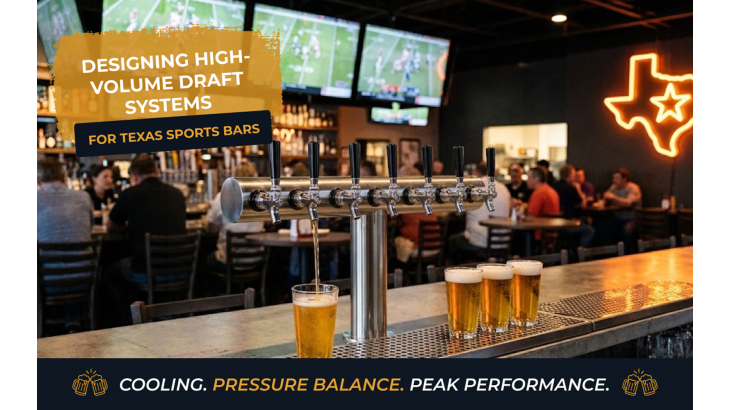
Sep 21 2026
12
Learn how to design a high-volume draft beer system for Texas sports bars. Optimize cooling, pressure balance, and peak-hour performance.
Designing High-Volume Beverage Dispensing for Texas Sports Bars
KEY TAKEAWAYS

High-volume Texas sports bars must design beverage systems for simultaneous pours and sustained peak demand.

Extreme heat increases cooling load and reduces recovery time during heavy service.

Proper glycol sizing and insulated long-draw lines are essential for temperature stability.

Gas distribution must remain balanced under surge conditions to prevent pressure drops.

Engineering for peak load — not average traffic — ensures consistent pours during game-day spikes.
Texas sports bars operate under intense demand. Game nights, playoff weekends, and major events can push dozens of taps to pour simultaneously for hours at a time. Add high ambient temperatures and busy outdoor patios, and beverage systems must handle both volume spikes and heat stress at once.
In high-traffic environments, even small weaknesses in cooling capacity, gas distribution, or line balance become visible fast — usually as foam, slow pours, or pressure instability during peak service.
Designing a high-volume beverage dispensing system in Texas means planning for worst-case conditions, not average days. Stability, recovery speed, and consistent temperature across all taps must be engineered from the start.
WHAT “HIGH VOLUME” REALLY MEANS IN A TEXAS SPORTS BAR
“High volume” isn’t just about the number of taps on the wall. It’s about handling simultaneous demand and maintaining sustained output under intense peak conditions. When game day hits, the draft system must perform flawlessly without slowing down your staff or compromising the quality of the pour.
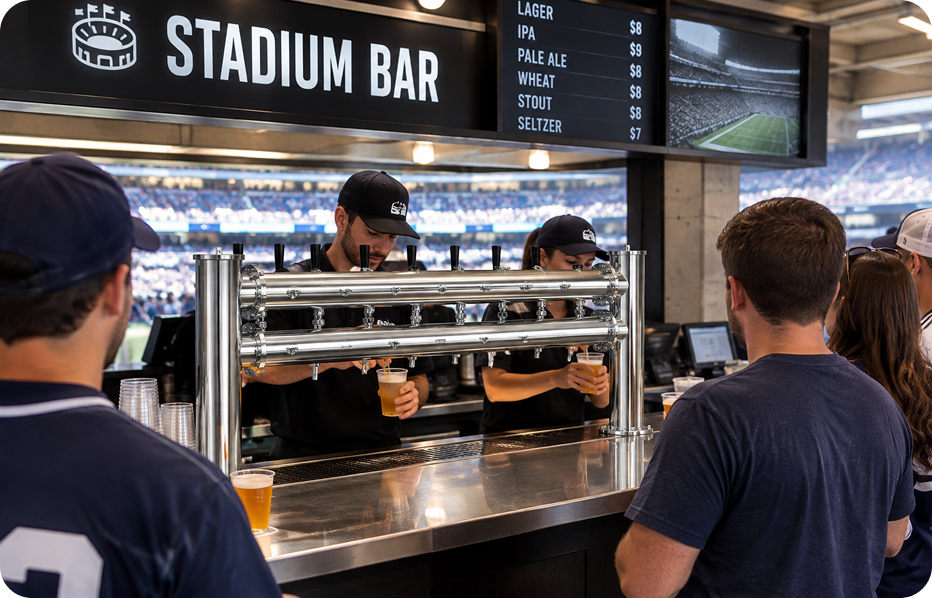
Cooling Design for Extreme Demand
Cooling is the backbone of any high-volume beverage system, but in Texas sports bars, it must handle two simultaneous stresses: peak traffic and elevated ambient heat.
During major games, dozens of pours may occur within minutes. Every pour draws cold product from the system while warm air continues transferring heat into towers, trunk lines, and exposed components. If the cooling system cannot recover quickly, temperature begins to drift — and foam follows.
Proper Glycol Sizing for Peak Load
High-volume environments require glycol systems sized for simultaneous demand, not average daily flow. Undersized chillers may perform adequately during slow periods but struggle during sustained peak hours. In Texas heat, this margin disappears quickly.
System Design |
System Effect |
Result on Pour |
|---|---|---|
| Undersized Chiller | Struggles to maintain temperature during sustained peak hours and simultaneous demand. | Warm beer, excessive foam, and lost product during busy shifts. |
| Slow Recovery | Fails to cool down rapidly after a heavy surge of pours. | Cascading instability and inconsistent temperature across multiple taps. |
| Peak-Load Sizing | Accounts for total taps, trunk runs, patio exposure, and maximum ambient temperature. | Rapid recovery, stable operating temperature, and perfect pours under stress. |
Recovery time is critical. After a heavy surge of pours, the system should return to stable operating temperature rapidly. Slow recovery creates cascading instability across multiple taps.
Long-Draw Considerations
Many Texas sports bars use long-draw systems to serve both indoor and outdoor seating areas. Longer runs increase thermal exposure and require stronger insulation and consistent glycol circulation. Even small inefficiencies in insulation become magnified across distance.
Outdoor Patio Cooling Challenges
Patio installations face additional solar load. Towers exposed to direct sun warm quickly, and surrounding surfaces radiate heat back into the system.
Patio Condition / Design |
System Effect |
Result on Pour |
|---|---|---|
| Direct Solar Load | Towers warm quickly, and surrounding surfaces radiate heat back into the draft system. | The first pour after even a short idle period is noticeably warmer. |
| Inadequate Cooling Capacity | The system fails to overcome the combined stress of outdoor ambient heat and high traffic. | Temperature drifts, leading to excessive foam and inconsistent quality. |
| Engineered for Extremes | Cooling is specifically scaled to handle massive solar heat and peak simultaneous demand. | The system remains perfectly stable, even when every tap is pouring at once. |
GAS SYSTEM STABILITY DURING PEAK HOURS
In high-volume Texas sports bars, gas stability becomes just as critical as cooling performance. During major events, multiple taps may open simultaneously, creating sudden demand spikes in gas delivery. If the system isn’t engineered for these surges, pressure imbalance appears almost instantly. Cooling may keep beer cold — but stable gas delivery ensures it pours correctly when demand is at its highest.
POINT 1: PREVENT PRESSURE DROP UNDER SIMULTANEOUS POURS
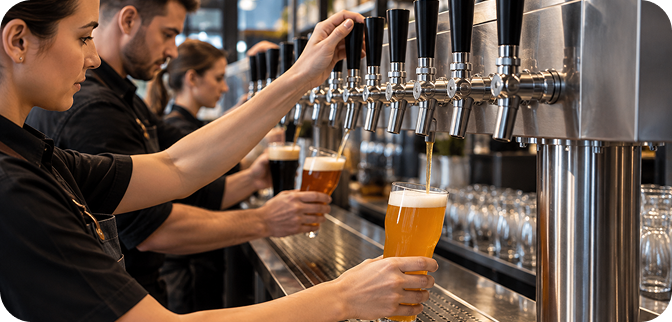
When several taps are opened at once, gas is drawn rapidly from distribution lines. In undersized systems, this can cause momentary pressure drops. Even slight fluctuations affect flow rate and carbonation stability, leading to inconsistent pours between taps. High-capacity environments require proper cylinder sizing, stable distribution, and balanced pressure settings across all lines to ensure steady delivery.
POINT 2: IMPLEMENT PROPER REGULATOR PANEL DESIGN
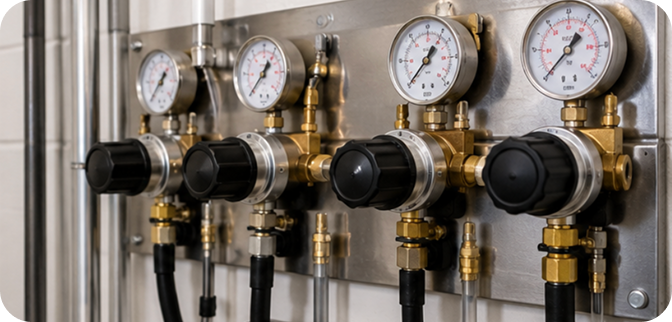
Single regulators feeding multiple lines often struggle under surge conditions. High-volume sports bars benefit from properly configured regulator panels that distribute pressure evenly across taps. Balanced distribution prevents one line from overpowering another when demand spikes, keeping the flow rate perfectly consistent.
POINT 3: STABILIZE BLENDED GAS FOR SPECIFIC STYLES
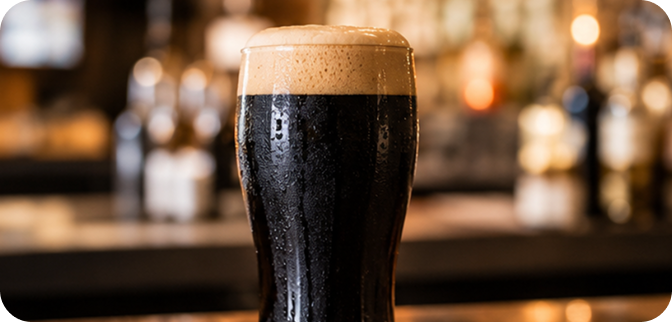
Some sports bars serve a mix of lagers, IPAs, and nitrogen-based styles. Blended gas systems must remain stable under heavy draw. If pressure fluctuates during peak service, carbonation balance shifts and certain styles may pour inconsistently, ruining the presentation and flavor profile.
POINT 4: OPTIMIZE CYLINDER CAPACITY AND PLACEMENT
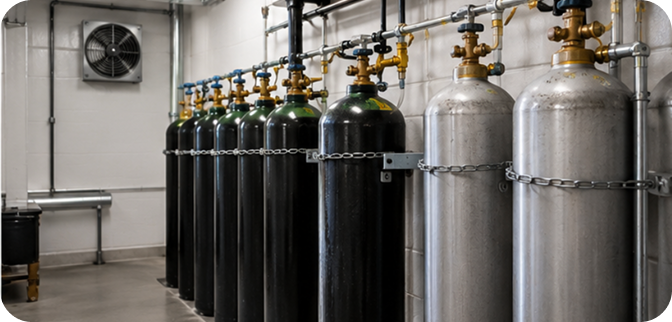
Texas heat also affects gas cylinders. Elevated temperatures can increase internal pressure, while rapid draw during peak service stresses supply. Proper placement in ventilated, temperature-controlled environments helps maintain stable delivery. During overtime or championship games, the system must maintain consistent pressure across every tap without manual adjustment.
DESIGNING FOR SIMULTANEOUS POURS
In Texas sports bars, simultaneous pours are the norm, not the exception. During peak moments — kickoff, halftime, overtime — multiple bartenders may open taps at the same time. A system that performs well under single-pour conditions can become unstable when several lines are activated together. Designing for simultaneous pours means building a system that remains balanced under stress, responding with consistent pressure, steady temperature, and predictable flow without manual adjustments.
POINT 1: ENSURE LINE BALANCE ACROSS MULTIPLE TAPS
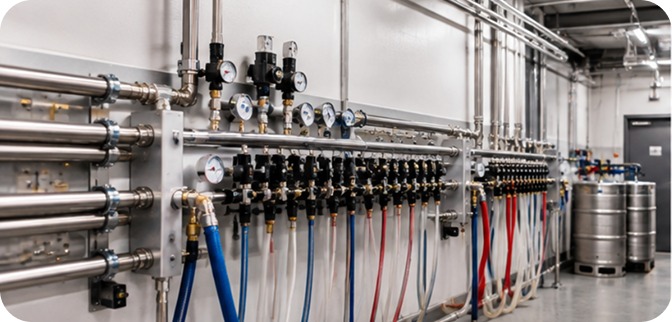
Each draft line must be balanced individually and calibrated to perform consistently alongside the others. If one line has higher resistance or a longer run, pressure differences become noticeable when several taps operate at once. This results in uneven flow — one tap pours aggressively while another slows down. Balanced line length, restriction, pressure settings are essential to prevent these disparities.
POINT 2: OPTIMIZE TOWER LAYOUT AND TAP GROUPING
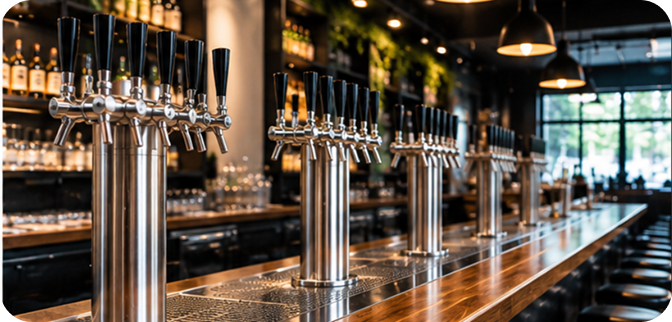
High-volume bars often use multiple towers spread across long bar tops. Strategic tap grouping reduces pressure drop and helps maintain uniform flow across the entire system. Placing heavily used taps near primary distribution points can significantly improve consistency and reliability during sudden surge periods.
POINT 3: AVOID CROSS-INTERFERENCE DURING SURGES
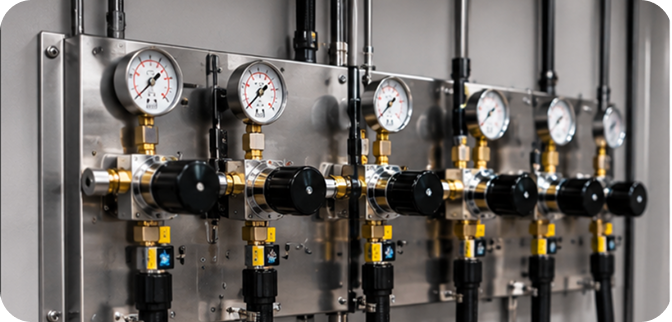
In poorly designed systems, heavy use on one set of taps can influence pressure behavior elsewhere in the system. This cross-interference typically occurs when gas distribution is undersized or poorly segmented. Proper design isolates demand spikes so that no single surge destabilizes the entire system, ensuring steady pours everywhere.
POINT 4: MAINTAIN TEMPERATURE STABILITY UNDER LOAD
Simultaneous pours increase cooling demand rapidly. If glycol circulation cannot compensate fast enough, the temperature may rise slightly across multiple lines. Even minor temperature drift during peak service increases foam formation and slows recovery. The cooling system must be engineered to hold temperature steady, even when every tap is flowing at once.
COMMON DESIGN FAILURES IN BUSY TEXAS BARS
High-volume beverage systems rarely fail because of a single catastrophic mistake. Instead, instability usually stems from small design oversights that only become visible under real peak conditions — exactly when Texas sports bars are busiest.
System Design |
System Effect |
Result on Pour |
|---|---|---|
| Undersized Cooling Systems | Sized for average weekday traffic rather than game-night demand, leaving no margin for Texas heat. | Temperature drift, slower recovery time, and increased foam across multiple taps. |
| Inadequate Gas Distribution | Minimal infrastructure lacks proper segmentation, creating severe pressure imbalances under simultaneous pours. | Uneven flow and inconsistent carbonation when heavy draw occurs on one set of taps. |
| Ignoring Load Calculations | Expanding taps or patios without recalculating total system load increases cooling demand and pressure complexity. | Compounding instability across the entire system as each added line stresses the infrastructure. |
| Poor Insulation on Long Runs | Inadequately protected trunk lines suffer massive thermal gain during hot Texas afternoons. | Systems that appear stable in moderate weather fail, dispensing warm, foamy beer during summer peaks. |
| Reactive Pressure Adjustments | Staff adjust pressure settings as a quick fix for foam, ignoring root causes related to temperature or system sizing. | Worsens carbonation balance and creates long-term inconsistency across multiple taps. |
Recovery time is critical. After a heavy surge of pours, the system should return to stable operating temperature rapidly. Slow recovery creates cascading instability across multiple taps.
GAME-DAY RELIABILITY STRATEGY FOR TEXAS SPORTS BARS
In Texas sports bars, reliability is not optional — it is directly tied to revenue. Game days bring predictable traffic surges, extended peak hours, and simultaneous demand across multiple taps. Systems that are only designed for normal weekday flow will struggle when every screen is showing a major event.
Reliability Strategy |
Action & Implementation |
Result on Performance |
|---|---|---|
| Pre-Event System Check | Confirm stable temperatures, consistent pressure, normal pump performance, and check for leaks before major games. | Reduces the risk of reactive adjustments during service and ensures readiness for peak traffic. |
| Peak-Hour Monitoring | Observe recovery speed between heavy pour cycles, foam consistency, and any noticeable pressure lag. | Early detection allows small corrections before instability spreads across the entire system. |
| Planning for Heat Peaks | Evaluate systems seasonally to ensure cooling capacity and insulation can handle high ambient heat combined with heavy service. | Prevents system failure during demanding afternoon games when summer load exceeds winter conditions. |
| Designing for Redundancy | Build margin into both cooling and gas delivery by slightly oversizing critical components. | Improves system resilience during unexpected demand spikes or overtime extensions. |
Recovery time is critical. After a heavy surge of pours, the system should return to stable operating temperature rapidly. Slow recovery creates cascading instability across multiple taps.
Conclusion
- Designing high-volume beverage dispensing for Texas sports bars requires more than adding taps. It demands precise engineering for peak demand, extreme heat, and simultaneous pours across multiple service zones.
- Every component must support consistent performance. Cooling capacity must handle rapid recovery, gas systems must remain stable under surges, and line balance must prevent cross-interference.
- The difference between foam and flawless service is not luck—it is system design. When engineered correctly, systems deliver smooth flow and predictable temperatures even during championship overtime.

Frequently Asked Questions
Plan for peak game-day demand, keg storage location, and the distance to each serving station. In Texas, hot weather and outdoor service areas also affect cooling requirements. The system should support simultaneous pours while keeping beer cold throughout the route from keg to faucet.
Heat entering exposed lines and towers can warm the beer before it reaches the glass, increasing foam and waste. Patio installations are especially vulnerable to direct sunlight and high ambient temperatures. Effective insulation, tower cooling, and appropriate equipment placement help maintain consistent pours.
Sizing should account for trunk line length, insulation, tower cooling, and the temperatures surrounding the equipment and line routes. Include outdoor serving stations and hot utility spaces in the assessment. Select equipment using its rated performance under the expected conditions, rather than tap count alone.
Yes, provided the system can support both serving areas. A Texas patio may have greater heat exposure and a longer beer line route than the indoor bar. Both routes need adequate cooling, and each beer line must be balanced for its length and elevation.
The problem may be local heat gain in the outdoor tower or the lines feeding it. Direct sun, damaged insulation, or inadequate glycol circulation can leave patio beer warmer than beer served indoors. Compare temperatures at both stations and inspect the outdoor cooling route before adjusting pressure.
Test multiple taps together before service to confirm that gas delivery and line balance support simultaneous demand. If pours slow when several taps open, have the gas supply, regulators, and distribution checked. Increasing pressure without diagnosing the problem can create additional dispensing issues.
Outdoor heat alone is not a reason to increase pressure. Settings should match the actual beer temperature, carbonation, and dispensing requirements. If summer heat is warming the beer, address refrigeration, insulation, or tower cooling rather than using pressure adjustments to compensate.
Review the additional line distance, outdoor heat exposure, glycol circulation, and available cooling capacity. Confirm that gas distribution and refrigerated keg storage can support the expanded service. Assess the setup for warm-weather game days when indoor and patio taps may be operating together.
Check beer temperature and pour quality at both indoor and patio taps, including the first pour after an idle period. Confirm normal cooling operation, sufficient gas supply, and chilled replacement kegs. Test several taps simultaneously before customers arrive to catch temperature or flow problems early.
Contact Us today so our sales team answer all your questions and prepare a quote tailored to your needs.