Elevate your beverage business with unbeatable glycol chiller deals


 Sign In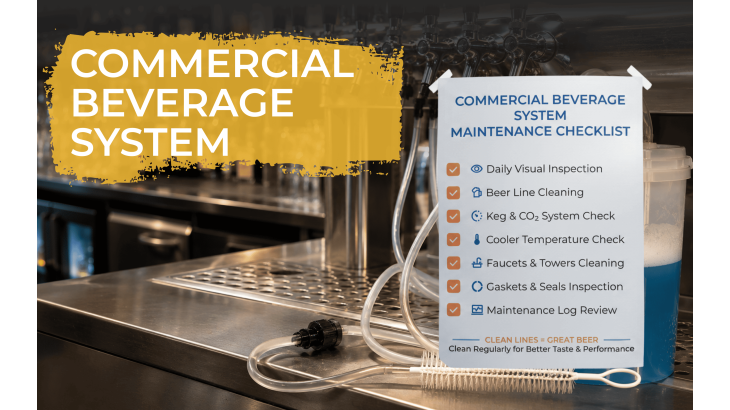
May 14 2026
734
Key Takeaways
- Commercial beverage systems require routine maintenance to deliver consistent pours during high-volume service.
- Small issues like temperature drift, pressure imbalance, or worn components escalate quickly when left unchecked.
- Daily, weekly, monthly, and seasonal checks help prevent foam, downtime, and product waste.
- Preventive maintenance extends the lifespan of cooling, gas, and dispense equipment.
- A structured checklist shifts beverage system care from reactive fixes to controlled, reliable performance.
In commercial bars and restaurants, beverage systems are under constant pressure to perform. High volume, long service hours, and frequent keg changes leave little room for error, yet maintenance is often addressed only after problems appear. Foam at the tap, warm pours, pressure issues, or slow service usually signal that the system has already drifted out of balance.
A structured maintenance checklist helps prevent these issues before they affect service. Routine checks keep gas, cooling, and dispense components working together, reduce product loss, and protect expensive equipment from premature failure. Instead of reacting during peak hours, operators gain control through consistency.
This checklist is built specifically for commercial beverage systems in bars and restaurants, with clear daily, weekly, monthly, and seasonal tasks designed to keep pours consistent, service smooth, and downtime to a minimum.
Why Maintenance Matters in Commercial Beverage Systems
Maintenance matters more in commercial beverage systems than in any other dispensing environment because of scale and consistency requirements. Bars and restaurants rely on repeatable performance across every pour, every shift, and every tap. When systems drift out of balance, the impact is immediate and visible to customers.
Poor maintenance leads to:
- increased foam and product loss
- inconsistent carbonation and temperature
- slower service during peak hours
- premature wear of pumps, regulators, and cooling equipment
Beyond performance, maintenance also affects safety and compliance. Gas leaks, pressure instability, and cooling failures can create hazardous conditions in confined spaces such as walk-in coolers and keg rooms.
Preventive maintenance reduces downtime, extends equipment lifespan, and allows operators to address small issues before they disrupt service. In high-volume environments, consistency isn’t achieved by constant adjustment — it’s achieved through routine care.
Daily Beverage System Maintenance Checks
Daily checks are essential for consistent beverage system performance. They take only a few minutes but help catch early warning signs before they lead to foam, downtime, or service issues during busy hours.
Visual System Inspection
At the start of each shift, staff should inspect key system areas, including keg couplers, gas lines, fittings, and visible beer lines. Look for moisture, condensation, loose connections, or leaks, as even minor changes can indicate developing problems.
Temperature Verification
Confirm that beer is pouring at the expected temperature. Warm pours often point to cooling instability, insulation issues, or circulation problems.
Pour Behavior Check
Watch for excessive foam, slow flow, or inconsistent head formation. These signs often appear before larger mechanical problems and should be noted early.
Listen for Unusual Sounds
Hissing, rattling, or irregular cycling from pumps or cooling equipment may signal leaks, pressure imbalance, or component strain.
Confirm Normal Operation During Service
During early pours, make sure flow is steady across taps, carbonation appears stable, and no manual adjustment is needed to get a proper pour. If staff are compensating at the bar, the system is already drifting out of balance.
Daily checks require no special tools — just consistency and attention. Logging these observations helps create a baseline for faster troubleshooting and more effective long-term maintenance.
Weekly Beverage System Maintenance Tasks
Weekly maintenance bridges the gap between daily observation and deeper monthly servicing. These tasks help stabilize performance and prevent small issues from developing into system-wide problems during high-volume service.
Inspect Keg Couplers and Connections
Remove and inspect keg couplers for wear, buildup, or improper engagement. Seals should remain flexible and intact, and couplers should lock cleanly into position without resistance. Even minor wear can affect pressure transfer and flow consistency.
Check Faucets and Shanks
Faucets should open smoothly and close completely without sticking or dripping. Inspect shanks for signs of moisture or residue, which may indicate leaks or temperature-related condensation. Addressing these issues early helps prevent foam and sanitation concerns.
Review Gas Pressure Behavior
While pressure settings may not change daily, observing how pressure behaves throughout the week is important. Note any fluctuations during busy periods or pressure adjustments made by staff to compensate for pour issues. These patterns often reveal underlying system imbalances.
Inspect Beer Line Condition
Look for kinks, sagging sections, or discoloration in visible beer lines. Lines should remain properly supported and insulated. Changes in line appearance often signal temperature instability or the beginning of internal buildup.
Confirm System Balance
Ensure all taps pour consistently under similar conditions. Differences between taps may point to localized restrictions, coupler issues, or gas delivery inconsistencies rather than product-specific problems.
Weekly maintenance reinforces system awareness. It ensures that performance changes are addressed before they affect service quality or lead to rushed fixes during peak hours.
Monthly Beverage System Maintenance Tasks
Monthly maintenance focuses on overall system health rather than daily symptoms. These checks help identify gradual wear, performance drift, and efficiency loss before they lead to downtime or inconsistent pours.
Inspect Cooling Performance
Review how consistently the system holds temperature over time. Slow recovery after busy service may indicate circulation issues, insulation problems, or reduced cooling efficiency.
Examine Glycol Lines and Insulation
Inspect visible glycol lines for moisture, condensation, or damaged insulation. Poor insulation allows temperature gain along the run and can increase foam at the tap.
Check Pumps and Motors
Listen for changes in sound or vibration during operation. Increased noise, irregular cycling, or reduced output may signal wear or early component failure.
Verify Sensor Accuracy
Make sure temperature probes and control sensors are providing stable, reliable readings. Sensor drift can push the system out of range without obvious warning.
Review System Cleanliness
Inspect for residue, buildup, or early restriction in key areas. Catching cleanliness issues early helps prevent sanitation and flow problems later.
Document Trends and Adjustments
Review maintenance logs for recurring issues, repeated adjustments, or performance complaints. Patterns often reveal root causes that isolated fixes miss.
Monthly checks provide a clearer view of long-term system condition and help operators plan maintenance before problems affect service.
Quarterly / Seasonal Beverage System Maintenance
Quarterly and seasonal maintenance helps protect long-term system stability. These checks focus on cooling, gas delivery, safety controls, and overall system load before small issues turn into costly failures during busy periods.
Inspect and Service Glycol Systems
Review glycol level, concentration, and circulation performance. Seasonal changes can affect cooling efficiency, so the system should remain within the manufacturer’s recommended range.
Flush and Replace Glycol as Needed
Over time, glycol loses efficiency and can place extra strain on pumps and internal components. Seasonal replacement helps maintain reliable cooling performance.
Evaluate Gas System Integrity
Inspect gas lines, fittings, and distribution points for wear or leaks. Confirm that pressure remains stable across all taps, especially during higher-demand periods.
Test Safety Controls and Alarms
Check pressure controls, temperature alarms, and monitoring devices to confirm they respond properly. This is especially important in enclosed areas such as keg rooms and walk-in coolers.
Reassess System Load
Seasonal changes in tap count, product mix, or service volume can put extra strain on the system. Review whether the current setup is still operating within its intended capacity.
Schedule Professional Inspection
A yearly professional inspection helps identify hidden issues, verify calibration, and recommend upgrades that improve reliability and efficiency.
Quarterly and seasonal maintenance helps bars and restaurants stay ahead of failures, reduce emergency repairs, and keep beverage service stable during peak demand.
Common Maintenance Issues Bars and Restaurants Overlook
Even well-run bars and restaurants often miss small maintenance issues that slowly affect beverage system performance. These problems may not cause immediate failure, but over time they lead to foam, inconsistent pours, and higher operating costs.
Ignoring Keg Couplers Between Keg Changes
Couplers are often reused without inspection. Worn seals, buildup, or improper engagement can affect pressure transfer and pour quality from the start.
Adjusting Pressure Instead of Fixing the Cause
Pressure is often changed to correct foam or slow pours, but this usually masks the real issue. Restriction, temperature instability, or worn components should be addressed directly.
Overlooking Insulation Damage
Damaged insulation on beer or glycol lines allows heat gain that may only become noticeable during busy service, when foam and temperature problems increase.
Assuming All Taps Behave the Same
Differences between taps are often blamed on the product, when they usually point to localized system issues such as line routing, coupler condition, or gas imbalance.
Skipping Documentation
Without simple maintenance records, recurring issues are harder to track and fix. Logging adjustments and performance changes helps identify patterns early.
Delaying Preventive Maintenance
Maintenance is often postponed until problems become visible, but that usually happens during the busiest periods. Preventive care reduces emergency fixes and keeps service more stable.
Recognizing these overlooked issues helps bars and restaurants move from reactive troubleshooting to more reliable system performance.
How a Maintenance Checklist Prevents Costly Problems
A maintenance checklist doesn’t add unnecessary work — it helps remove uncertainty from daily operations. In commercial bars and restaurants, most beverage system problems begin as small issues that go unnoticed until they affect service.
A structured checklist helps operators catch temperature drift, pressure instability, and minor leaks early, before they lead to foam, slow pours, inconsistent carbonation, or product waste. It also creates consistency across shifts by giving staff a clear process instead of relying on memory or individual habits.
From a cost standpoint, preventive maintenance helps protect pumps, compressors, regulators, and other high-value components from unnecessary wear. This reduces emergency repairs, downtime, and rushed replacements during busy service.
Just as importantly, regular checks support safer operation in keg rooms, walk-ins, and other confined system areas where gas and cooling issues can become serious if ignored.
Overall, a maintenance checklist helps bars and restaurants maintain more stable pours, lower operating costs, and fewer service disruptions.
Conclusion
Reliable beverage service depends on more than good equipment — it depends on consistent care. In commercial bars and restaurants, beverage systems operate under constant demand, and small maintenance gaps quickly turn into visible problems at the tap.
A clear maintenance checklist provides structure, accountability, and predictability. By breaking tasks into daily, weekly, monthly, and seasonal intervals, operators maintain control over system performance, reduce waste, and extend equipment lifespan. Instead of chasing foam, temperature swings, or pressure issues during service, teams stay ahead of problems before they affect guests.
When maintenance becomes routine rather than reactive, beverage systems perform as intended: stable pours, consistent quality, and uninterrupted service — shift after shift.